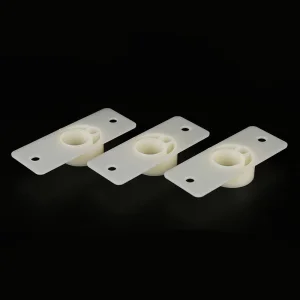
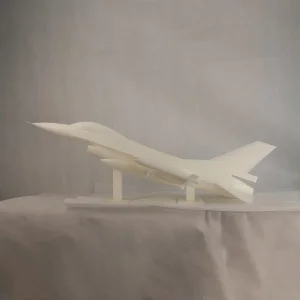
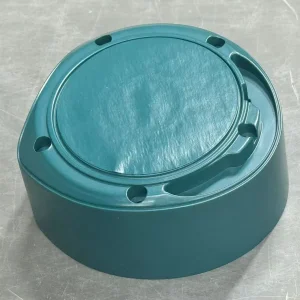
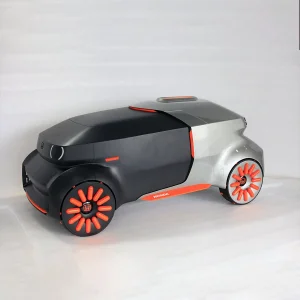
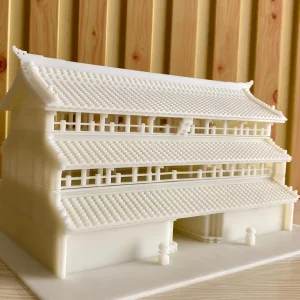
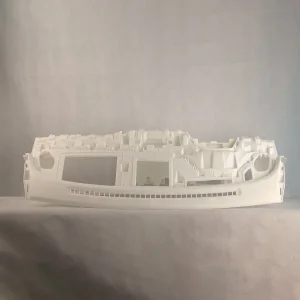
Direct supply of high-fidelity rapid prototypes and customized production parts designed to mitigate isolation constraints and long transport lead times.
The Republic of Kiribati, consisting of 32 atolls and one raised coral island scattered across 3.5 million square kilometers of the central Pacific Ocean, faces unique economic and logistical realities. Given its geographically isolated position, the reliance on long maritime trade routes from major global hubs presents severe friction in procuring mechanical components, specialized marine-grade parts, and industrial equipment. Whether for the critical maintenance of desalination plants in South Tarawa, public utility repair, maritime fishing fleet management, or sustainable ecotourism infrastructure, sourcing physical items takes weeks or months.
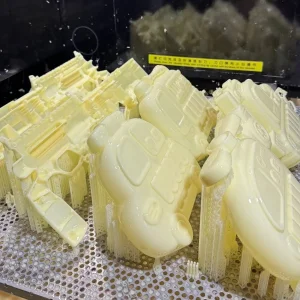
This is where Industrial 3D Printing (Additive Manufacturing) shifts the paradigm. Rather than storing millions of dollars in physical spare parts inventories that may rust in equatorial climates, Kiribati's state enterprises, telecom providers, and engineering networks can transition to a digital inventory model. By partnering with advanced Chinese fabrication facilities like Shenzhen Diem, designs are sent securely via digital files, manufactured with precise industrial specifications (using SLA, SLS, or DMLS/SLM printing systems), and delivered fast via air express pathways. This model significantly diminishes down-time for critical systems across Kiritimati, Tarawa, and the outer islands.
Equatorial maritime climates are notoriously unforgiving to metal assemblies. Standard manufacturing components wear down quickly under high salt spray, intense UV radiation, and high humidity. In response to this, our operations supply advanced functional materials like Carbon-Fiber Reinforced Polymers and Corrosion-Resistant Titanium (Ti-6Al-4V) alloys that withstand tropical environments far better than traditional cast iron or low-grade steel. By customizing design blueprints digitally, we optimize geometries to avoid stress corrosion cracking, offering custom tailored parts suited directly for Kiribati's environmental baseline.
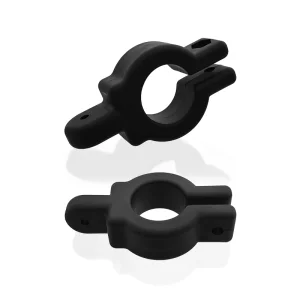
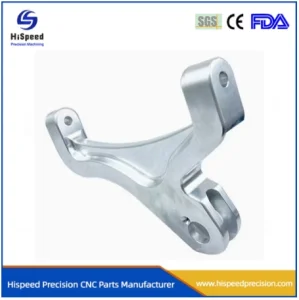
Ideal for local desalination and marine applications, leveraging Titanium and specialized 316L alloys.
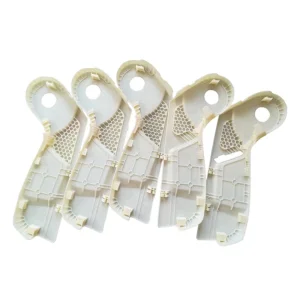
Send CAD files directly to our Shenzhen facility. We print, inspect, and ship to South Pacific hubs rapidly.
Full scale documentation, tight tolerancing up to ±0.05mm, and material quality assurance guarantees.
As the "Hardware Capital of the World," Shenzhen is uniquely positioned to handle customized low-volume prototyping and mass-scale production runs. Chinese additive manufacturing firms combine raw materials access, rapid technological iterations, and cost efficiencies that cannot be matched locally in Oceania. Partnering with Shenzhen Diem Printer Equipment Co., Ltd. gives Kiribati enterprises direct access to an expansive array of manufacturing technologies:
By bypassing multi-tier brokerages, Kiribati businesses communicate directly with our factory design engineers. This ensures that every file undergoes detailed Design for Additive Manufacturing (DFAM) analysis to identify structural vulnerabilities before printing begins, saving cost and preventing transit failures.
The global 3D printing industry is moving fast from basic aesthetic prototyping into functional structural manufacturing. In remote ocean markets, the adoption of SLS (Selective Laser Sintering) and SLM (Selective Laser Melting) is expanding rapidly because it offers structural characteristics comparable to billet-machined parts. Below are localized scenarios where Shenzhen Diem's custom fabrications solve concrete issues:
Clean water is critical on atolls. Saltwater filtration pumps, reverse osmosis manifolds, and valve bodies frequently suffer erosion from sand particles and chemical corrosion. We utilize SLS Nylon 12 and glass-filled composites to manufacture custom pump casings, impellers, and customized connectors that outlast standard imports and fit historical European or Asian plumbing setups perfectly.
Kiribati's fishing sector relies heavily on outboards and small fishing vessels. Custom linkages, carburetor adapters, prop seals, and electrical housing boxes can be quickly customized using high-impact SLA resins or CNC metal printing, ensuring standard hulls remain active when OEM spares are out of production.
To support connectivity across islands, telecommunications hardware must be shielded from harsh climates. Custom weatherproof housings, brackets for solar charging rigs, and bespoke sensor mounts are customized using carbon-fiber reinforced printing, offering incredible stiffness and thermal tolerance under intense tropical sunlight.
Past, Present, and Future – Building a Stronger Community Through Innovation
In 2010, Shenzhen Diem Printer Equipment Co., Ltd. was established with a vision: not just to manufacture digital printing equipment, but to harness technology to create meaningful value for communities and industries alike. Our mission from the beginning has been to introduce cutting-edge digital printing innovations to the market, while promoting sustainable growth in the technology sector.
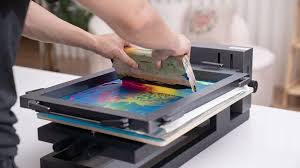
Over the years, we have evolved from a small startup into a leading company with a diverse business portfolio. Our team brings together a wide range of skills, innovative thinking, and a shared passion for excellence. By leveraging the unique perspectives and expertise of each team member, we continually push the boundaries of what digital printing technology can achieve.
At Shenzhen Diem, we are committed to exploring and advancing the frontiers of digital printing. Our product lineup includes a wide array of digital printers, notably our digital silk screen plate making machines, which are designed to optimize efficiency, simplify workflows, and integrate environmentally friendly practices. Our equipment serves industries such as advertising, printing, and packaging, while also supporting sectors like handicrafts, electronics, and even the power system, demonstrating the versatility and broad impact of our technology.
For our key clients, we provide high-performance silk screen printing solutions capable of handling complex and large-scale printing tasks, empowering businesses to meet diverse market demands with precision and reliability.
We believe that extraordinary achievements happen when people unite around a common purpose. Our mission extends beyond technology: we aim to foster sustainable development where people, businesses, and the environment thrive together.
By harnessing collective wisdom and innovative thinking, Shenzhen Diem Printer Equipment Co., Ltd. remains steadfast in our brand promise: Creating Value Together. Through continuous improvement, innovation, and community engagement, we aspire to lead the industry while making a positive impact on society.
Learn More About Us
We didn’t just start a company to produce printers — we started a company to build a better future. At Shenzhen Diem, every innovation, every machine, and every collaboration reflects our commitment to creating value together, for our customers, our communities, and the world.
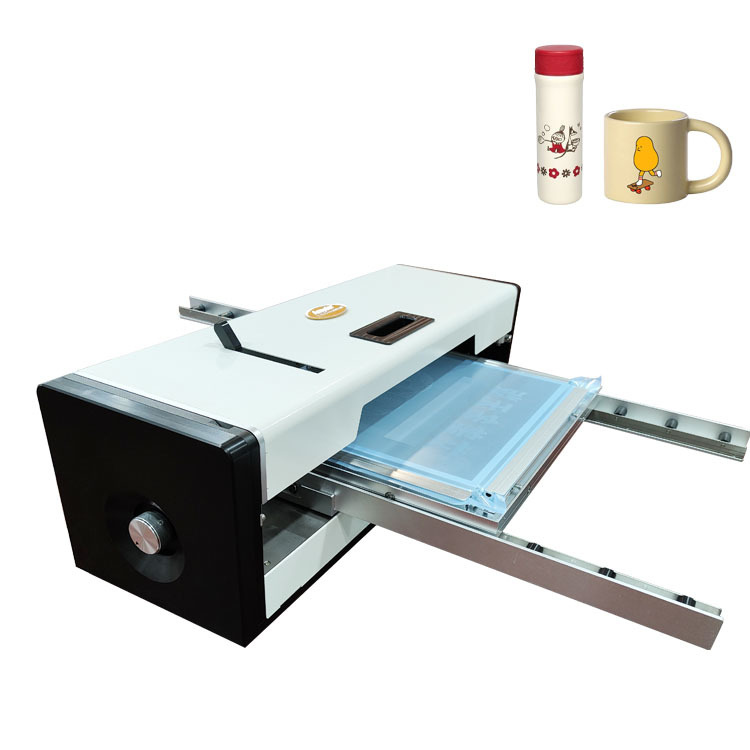
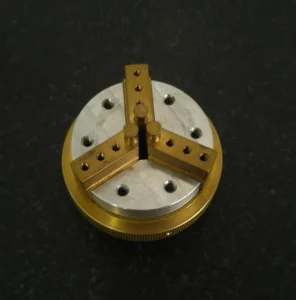
Explore our extensive options covering SLA, SLS, SLM, and multi-axis CNC post-finishing systems customized for complex engineering requirements.
At Shenzhen Diem, our processes align with international standard methodologies to ensure consistent reliability, mechanical toughness, and geometric compliance. Every component ordered for the Kiribati region undergoes a rigorous validation process:
We supply full trace reports, certificate of conformities, and material batch numbers upon shipment dispatch, giving logistics coordinators complete confidence in the integrity of their incoming spare units.
Key technical and logistics inquiries regarding custom 3D printing orders for Kiribati.
Production is completed in 3-5 days. Air express shipping (via DHL/FedEx) typically takes 7-12 working days to reach South Tarawa or Kiritimati, depending on regional flight connections through Nadi (Fiji) or Honolulu.
For metal components, Titanium Alloy (Ti-6Al-4V) and Stainless Steel 316L provide exceptional oxidation resistance. For plastics, SLS Nylon 12 and specialized PEEK or carbon-fiber composites withstand maritime humidity and UV weathering.
Yes, we can reverse-engineer structures. If you send us the worn-out physical component or accurate caliper measurements/detailed photos, our design staff can rebuild the 3D model, optimize it, and print a custom replacement.
Standard industrial 3D printing holds accuracy to ±0.1mm. If your design requires tighter bounds (such as bearing surfaces), we combine 3D printing with secondary CNC machining to reach tolerances of ±0.01mm.
No, we have no MOQ requirements. We support local businesses and utilities with single custom replacement parts as readily as we support mass production runs.
 Diem printer