In modern manufacturing, industrial lightweighting has shifted from a niche performance objective to a core regulatory and economic necessity. Across aerospace, automotive, marine, and medical equipment fields, reducing structural mass directly correlates with improved energy efficiency, higher payload capacity, and diminished carbon footprints. According to recent industrial data, the adoption of additive manufacturing (AM) for structural lightweighting is expanding at a Compound Annual Growth Rate (CAGR) of over 21.4%, moving aggressively from rapid prototyping to mid-to-high-volume end-use component production.
The traditional "subtractive" manufacturing paradigm dictates that complexity equals cost. By contrast, additive manufacturing enables "complexity for free," meaning intricate geometries that minimize weight while retaining or exceeding structural performance are now commercially viable. Multi-part assemblies are routinely consolidated into single, optimized components—eliminating mechanical fasteners, welding joints, and associated points of potential structural failure.
Achieving industrial-grade weight reduction requires a rigorous combination of generative design, advanced materials science, and optimized machine parameters. We implement three core methodologies to engineer lightweight structures without compromising structural integrity or mechanical fatigue life:
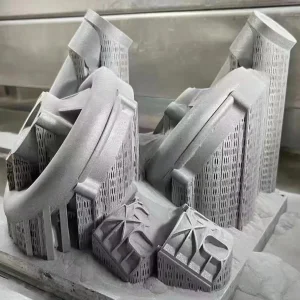
Using algorithmic finite element analysis (FEA), we map stress concentrations and load paths under operational load cases. The software systematically removes material from low-stress regions. The resulting design resembles organic, bone-like structures that provide the exact stiffness required along loading vectors while eliminating dead weight.
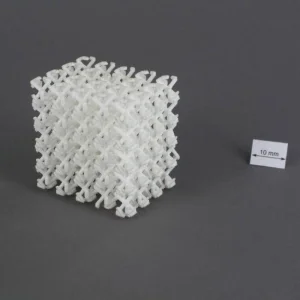
By substituting solid volumes with triply periodic minimal surface (TPMS) structures—such as Gyroids, Schwarz P, or Diamond lattices—we achieve high energy absorption and compression strength. These internal channels also facilitate heat dissipation and fluid flow, which is ideal for aerospace heat exchangers and medical implants.
The table below highlights the performance profiles of various additive manufacturing polymers and metals utilized in our lightweighting projects:
| Material Specification | AM Technology | Density (g/cm³) | Tensile Strength (MPa) | Key Applications |
|---|---|---|---|---|
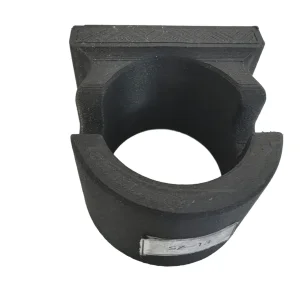
| PA12 Nylon (Polyamide) | SLS / MJF | 1.01 | 48 - 50 | Ducting, brackets, snap-fits, housings, mechanical assemblies. |
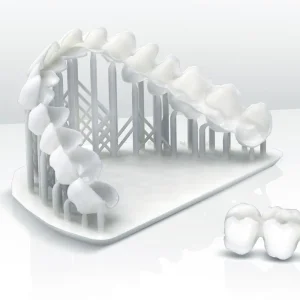
| SLA Rigid/Flexible Resins | SLA | 1.15 - 1.20 | 50 - 65 | Dental molds, high-definition masters, custom anatomical models. |
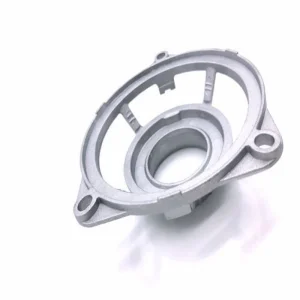
| AlSi10Mg (Aluminum Alloy) | SLM / DMLS | 2.68 | 350 - 450 | Aerospace brackets, heat sinks, custom automotive manifolds. |
| Ti6Al4V (Titanium Gr. 5) | SLM / EBM | 4.43 | 950 - 1050 | Biomedical implants, critical structural aerospace connectors. |
China's manufacturing infrastructure, centered in technology capitals like Shenzhen, offers unmatched efficiency, supply chain integration, and rapid scalability for high-end additive manufacturing. Shenzhen Diem Printer Equipment Co., Ltd. has established an advanced industrial printing cluster that bridges the gap between high-precision CAD modeling and full-scale product delivery.
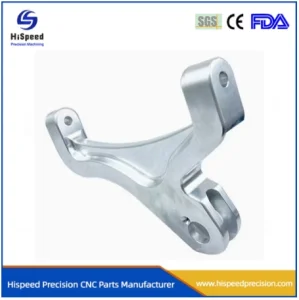
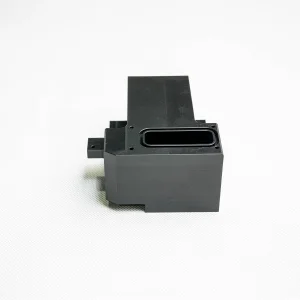
Our factory integrates multiple production nodes: from industrial-grade Selective Laser Sintering (SLS) systems capable of high-volume PA12 processing, to SLA resin lines for micron-level surface accuracy, to multi-axis CNC post-machining. This hybrid approach enables us to print topology-optimized raw parts and precision-machine critical mating surfaces, maintaining dimensional tolerances within ±0.05mm. The close proximity to reliable raw material suppliers and global logistics hubs guarantees reduced turnaround times and cost structures that are highly competitive relative to European or North American counterparts.
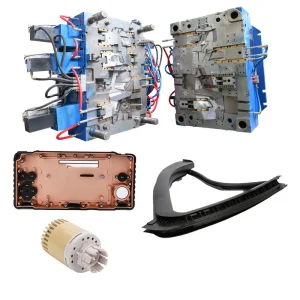
By consolidating SLS 3D printing, high-precision CNC machining, and tooling workflows into a unified production network, we drastically reduce transit times between manufacturing steps. Sourcing components from a vertically integrated supplier prevents communication overhead, lowers inspection discrepancies, and speeds up time-to-market.
The implementation of lightweighting structures varies significantly depending on regulatory environments and local industrial requirements. We cater to diverse regional challenges with specialized production methods:
As the industry advances, the integration of Artificial Intelligence (AI) and automated generative algorithms is reshaping design pipelines. Rather than manual adjustments, cloud-based software designs thousands of iterations based on defined stress thresholds and safety factors.
Furthermore, the development of composite materials—such as carbon-fiber-reinforced PA12 and PEEK—is bridging the gap between polymer and metal performance. These materials allow manufacturers to replace cast aluminum or steel brackets with lightweight printed composite structures, cutting component mass by more than half while retaining identical tensile strengths. This represents a paradigm shift in automotive chassis design and aerospace cabin architecture.
Procuring customized lightweight components from global manufacturers requires strict validation to ensure component reliability. We work closely with our partners' quality assurance teams, adhering to the following strict inspection protocols:
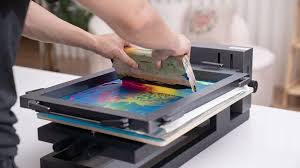
In 2010, Shenzhen Diem Printer Equipment Co., Ltd. was established with a vision: not just to manufacture digital printing equipment, but to harness technology to create meaningful value for communities and industries alike. Our mission from the beginning has been to introduce cutting-edge digital printing innovations to the market, while promoting sustainable growth in the technology sector.
Over the years, we have evolved from a small startup into a leading company with a diverse business portfolio. Our team brings together a wide range of skills, innovative thinking, and a shared passion for excellence. By leveraging the unique perspectives and expertise of each team member, we continually push the boundaries of what digital printing technology can achieve.
At Shenzhen Diem, we are committed to exploring and advancing the frontiers of digital printing. Our product lineup includes a wide array of digital printers, notably our digital silk screen plate making machines, which are designed to optimize efficiency, simplify workflows, and integrate environmentally friendly practices. Our equipment serves industries such as advertising, printing, and packaging, while also supporting sectors like handicrafts, electronics, and even the power system, demonstrating the versatility and broad impact of our technology.
For our key clients, we provide high-performance silk screen printing solutions capable of handling complex and large-scale printing tasks, empowering businesses to meet diverse market demands with precision and reliability.
We believe that extraordinary achievements happen when people unite around a common purpose. Our mission extends beyond technology: we aim to foster sustainable development where people, businesses, and the environment thrive together.
By harnessing collective wisdom and innovative thinking, Shenzhen Diem Printer Equipment Co., Ltd. remains steadfast in our brand promise: Creating Value Together. Through continuous improvement, innovation, and community engagement, we aspire to lead the industry while making a positive impact on society.
Learn More About Us
We didn’t just start a company to produce printers — we started a company to build a better future. At Shenzhen Diem, every innovation, every machine, and every collaboration reflects our commitment to creating value together, for our customers, our communities, and the world.
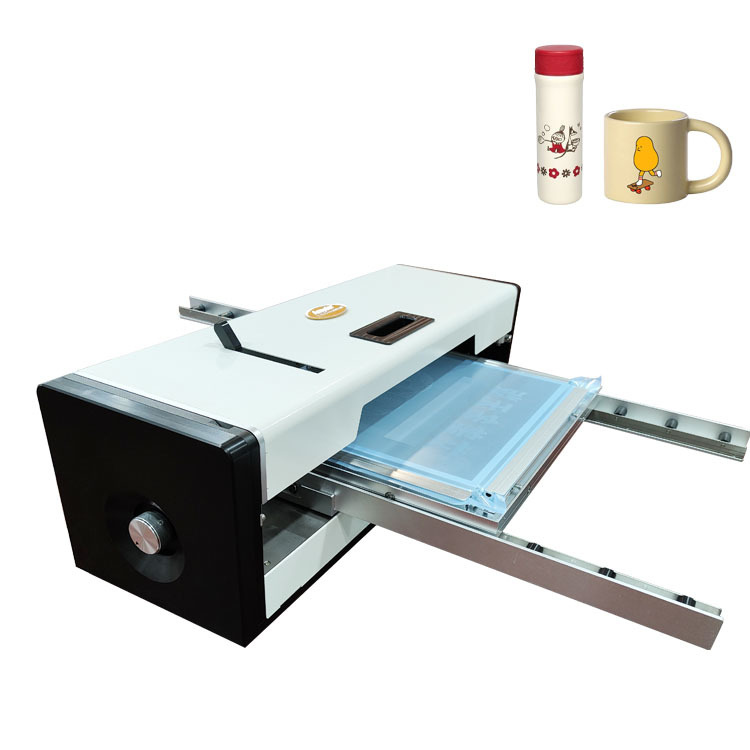
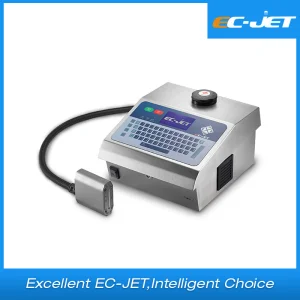
 Diem printer