Explore our top-tier industrial 3D printers, SLA technologies, and custom precision machining parts engineered to optimize efficiency.
A critical overview of market transformation, global compliance standards, and digital production efficiency indicators.
In the contemporary manufacturing sector, the integration of CE certified high-speed digital presses and advanced additive manufacturing techniques represents a paradigm shift. Globally, industrial ecosystems are transitioning away from high-mix, low-volume bottlenecks toward continuous-stream, automated manufacturing setups. This paradigm is underpinned by demanding international standards, where exporters must prove compliance through exhaustive verification like the CE mark (Conformité Européenne), ensuring all safety, environmental, and mechanical directives are strictly enforced.
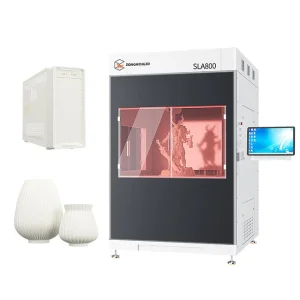
The global digital press and 3D printing equipment market is undergoing double-digit compound annual growth (CAGR). High-speed printing technology, historically reserved for basic graphic media, has evolved into a key process driver across mechanical engineering, biomedical devices, custom electronics, and industrial packaging. From functional stereolithography (SLA) resin sintering systems to direct metal laser melting architectures, modern factories rely on consistent, high-yield digital outputs. As high-speed digital presses implement sub-micron printhead control systems and hybrid drying protocols, they close the efficiency gap between traditional long-run screen printing processes and agile digital operations.
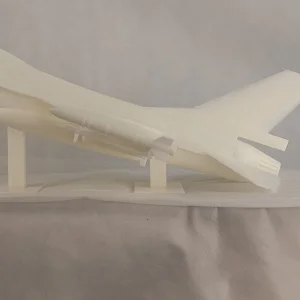
Parallelly, industrial-grade additive manufacturing (SLS and SLA) has stepped up to serve as the structural backbone for short-run tooling and complex geometries. Engineers no longer view 3D printing and digital pressing as isolated methodologies; instead, they represent unified streams of dynamic, computer-aided fabrication. This macro-system convergence permits real-time design variations, eliminates physical tooling overheads, and dramatically lowers carbon footprints. By selecting materials ranging from customized aerospace-grade aluminum alloys to medical-grade biocompatible resins, factories achieve highly localized, on-demand supply chain configurations.
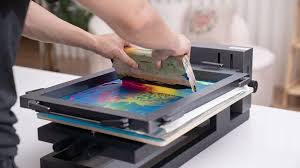
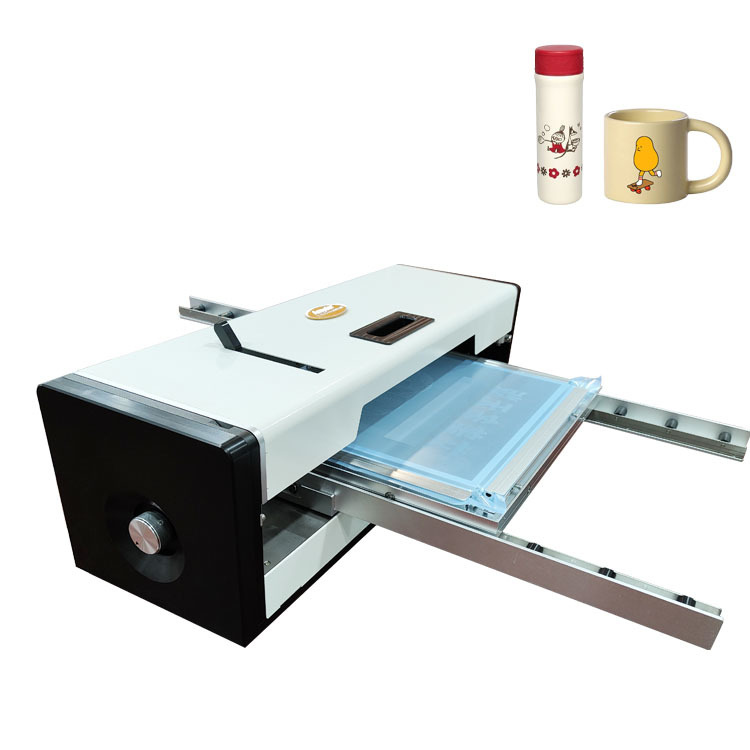
The core objective of modern mechanical workshops is to unify high-speed information channels. Shenzhen Diem Printer Equipment Co., Ltd. has established a comprehensive production roadmap linking traditional printing mechanisms to state-of-the-art additive manufacturing. Our proprietary development focuses heavily on digital silk screen plate making machines, which remove chemical emulsion steps, drastically reducing workflow complexity and eliminating ozone-depleting processes.
By blending traditional screen-printing efficiency with high-throughput digital printing plate-making, complex graphic designs can be transferred directly to substrates like electronics packaging, industrial control panels, and craft materials. Concurrently, our precision metal and polymer sintering (SLS/SLA) departments fabricate structural physical components that match this high degree of graphic complexity.
A decelong chronicle of value creation, engineering innovation, and sustainability in high-speed digital technologies.
Past, Present, and Future – Building a Stronger Community Through Innovation
In 2010, Shenzhen Diem Printer Equipment Co., Ltd. was established with a vision: not just to manufacture digital printing equipment, but to harness technology to create meaningful value for communities and industries alike. Our mission from the beginning has been to introduce cutting-edge digital printing innovations to the market, while promoting sustainable growth in the technology sector.
Over the years, we have evolved from a small startup into a leading company with a diverse business portfolio. Our team brings together a wide range of skills, innovative thinking, and a shared passion for excellence. By leveraging the unique perspectives and expertise of each team member, we continually push the boundaries of what digital printing technology can achieve.
At Shenzhen Diem, we are committed to exploring and advancing the frontiers of digital printing. Our product lineup includes a wide array of digital printers, notably our digital silk screen plate making machines, which are designed to optimize efficiency, simplify workflows, and integrate environmentally friendly practices. Our equipment serves industries such as advertising, printing, and packaging, while also supporting sectors like handicrafts, electronics, and even the power system, demonstrating the versatility and broad impact of our technology.
For our key clients, we provide high-performance silk screen printing solutions capable of handling complex and large-scale printing tasks, empowering businesses to meet diverse market demands with precision and reliability.
We believe that extraordinary achievements happen when people unite around a common purpose. Our mission extends beyond technology: we aim to foster sustainable development where people, businesses, and the environment thrive together.
By harnessing collective wisdom and innovative thinking, Shenzhen Diem Printer Equipment Co., Ltd. remains steadfast in our brand promise: Creating Value Together. Through continuous improvement, innovation, and community engagement, we aspire to lead the industry while making a positive impact on society.
Learn More About Us
We didn’t just start a company to produce printers — we started a company to build a better future. At Shenzhen Diem, every innovation, every machine, and every collaboration reflects our commitment to creating value together, for our customers, our communities, and the world.
Deploying precision manufacturing, metal additive solutions, and high-resolution polymers in mission-critical environments.
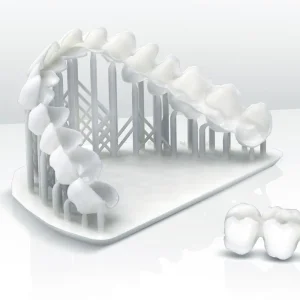
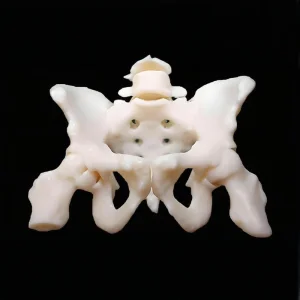
Utilizing advanced SLA resins and high-grade biocompatible titanium alloys, we fabricate customized dental implant guides and complex orthopedic models. High-resolution additive processes ensure dimensional tolerances below 50 microns, ensuring patient comfort and surgical precision.
Aerospace manufacturers utilize carbon-fiber reinforced filaments and sintered aluminum alloys to design ultra-lightweight structural frames. By utilizing topological optimization software alongside SLS technology, raw material consumption drops by up to 40% while structural integrity increases.
Modern electronics demand rapid screen platemaking for circuit board components and casing prints. Our high-efficiency plate making machines deliver sharp line edges and ultra-precise raster screening, facilitating the integration of micro-conductive paths and aesthetic exterior printing.
How we maintain strict compliance parameters to serve highly regulated markets across Europe, the Americas, and Asia.
A "CE Certified" system is not merely a declaration of convenience; it represents a comprehensive engineering commitment. Exported equipment must comply with the Machinery Directive 2006/42/EC, the Low Voltage Directive 2014/35/EU, and the EMC (Electromagnetic Compatibility) Directive 2014/30/EU. For exporters like Shenzhen Diem, our digital plate making machines and corresponding high-speed presses undergo meticulous testing regimes. These cover insulation resistance, electromagnetic emission damping, structural risk assessments, and double-channel safety interlocks.
Looking ahead, our technical roadmap integrates artificial intelligence into the printing path calibration process. Through deep learning neural networks, real-time optical scanning checks ink deposition or layer-by-layer laser sintering in real time. If a deviation exceeding 10 microns is detected, the machine's closed-loop control system automatically adjusts the nozzle offset or laser output power on the fly. This level of automation significantly reduces material waste and minimizes manual operator oversight, translating into a lower total cost of ownership (TCO) for global buyers.
Technical responses regarding material limits, output speeds, CE conformity, and custom OEM processes.
CE Certification ensures the equipment complies with European safety, health, and environmental protection standards. It involves rigorous testing for mechanical stability, structural integrity, electromagnetic interference, and electrical safety, giving buyers high reliability and smooth customs clearance globally.
Traditional screen making requires film output, exposure, washing, and chemical development. Our digital plate making machines transfer patterns directly from the computer to the screen frame using precise lasers, cutting production time down to minutes and eliminating toxic chemical waste.
Yes. With materials like glass-filled nylon (via Selective Laser Sintering - SLS) and specialized high-strength resins (via Stereolithography - SLA), parts feature mechanical properties similar to injection-molded plastics. This makes them ideal for functional aerospace ducts, automotive intakes, and medical equipment chassis.
For custom CNC machined parts, we regularly achieve tolerances as tight as ±0.005mm. For industrial SLS and metal 3D printing, standard dimensional tolerances range between ±0.1mm and ±0.2mm depending on the component's scale and orientation, which can be further refined via post-machining processes.
We focus on resource-efficient product designs. By eliminating film exposure chemistry from screen making and adopting additive layouts that minimize raw material waste, our production methods reduce energy and material consumption compared to subtractive manufacturing.
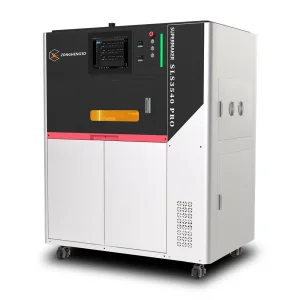
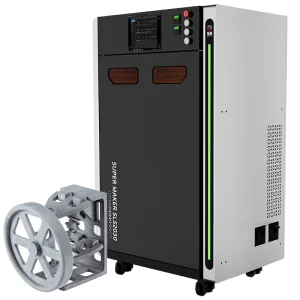
Select from our certified fleet of large-format sintering systems and customized production components.

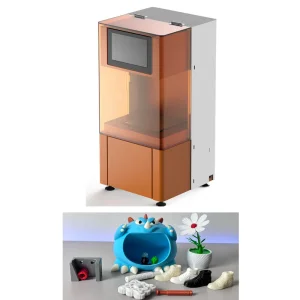
 Diem printer