Explore our high-precision 3D printing capabilities, rapid prototyping services, and customized industrial engineering components.
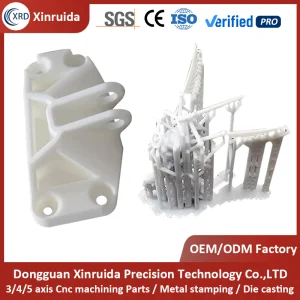
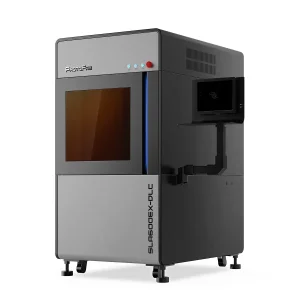
Past, Present, and Future: In 2010, Shenzhen Diem Printer Equipment Co., Ltd. was established with a vision: not just to manufacture digital printing equipment, but to harness technology to create meaningful value for communities and industries alike. Our mission from the beginning has been to introduce cutting-edge digital printing innovations to the market, while promoting sustainable growth in the technology sector.
Over the years, we have evolved from a small startup into a leading company with a diverse business portfolio. Our team brings together a wide range of skills, innovative thinking, and a shared passion for excellence. By leveraging the unique perspectives and expertise of each team member, we continually push the boundaries of what digital printing and additive manufacturing technology can achieve.
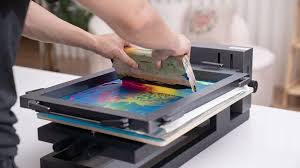
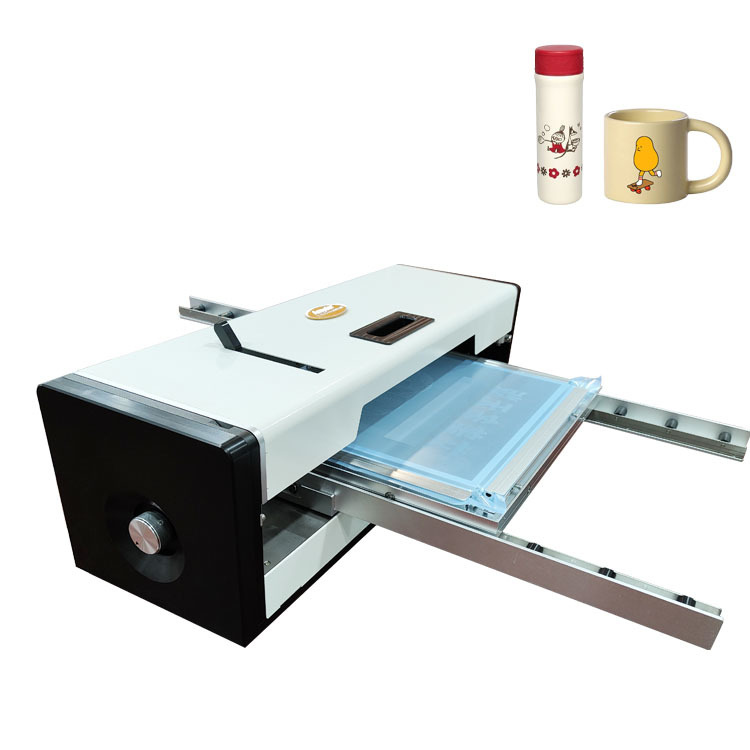
At Shenzhen Diem, we are committed to exploring and advancing the frontiers of digital fabrication. Our product lineup includes a wide array of digital printers, notably our digital silk screen plate making machines, which are designed to optimize efficiency, simplify workflows, and integrate environmentally friendly practices. Our equipment serves industries such as advertising, printing, and packaging, while also supporting sectors like handicrafts, electronics, and even the power system, demonstrating the versatility and broad impact of our technology.
How Additive Manufacturing (AM) is redefining heat transfer efficiency, pressure drop optimization, and structural integration.
Triply Periodic Minimal Surfaces (TPMS), such as Gyroids and Schwarz-D structures, offer mathematically optimized surface-area-to-volume ratios. These complex geometries, impossible to fabricate via traditional CNC machining or brazing, maximize fluid turbulence and heat transfer coefficients while maintaining low pressure drops.
We utilize high-grade engineering powders including AlSi10Mg (Aluminum), Inconel 718 (Nickel-Superalloy), Titanium Ti6Al4V, and Stainless Steel 316L. These materials are selected for their high thermal conductivity, corrosion resistance, and structural integrity under extreme thermal cycling and high-pressure environments.
By printing the heat exchanger core, manifold, and mounting brackets as a single monolithic component, we eliminate brazed joints, welds, and gaskets. This drastically reduces the risk of leakage, minimizes weight, and simplifies the assembly supply chain for aerospace and automotive systems.
The global demand for high-performance thermal management has surged with the rise of electric vehicles (EVs), high-performance computing (HPC), aerospace exploration, and green hydrogen production. Conventional heat exchangers are no longer sufficient to meet the strict weight, volume, and efficiency targets of modern systems.
Today, 3D printed heat exchangers are transitioning from low-volume prototyping to serial production. Key industries leveraging this technology include:
Tailored thermal management solutions engineered to meet regional industrial requirements and environmental standards.
Designed for liquid rocket propulsion and defense systems. Our metal 3D printed heat exchangers withstand extreme vibration, cryogenic temperatures, and high-pressure differentials, meeting strict aerospace standards (AS9100 equivalents).
Optimized for European electric vehicle manufacturers focusing on weight reduction and battery range extension. We provide ultra-lightweight aluminum alloy cooling plates with integrated fluid channels that fit into tight chassis spaces.
High-density liquid cooling blocks tailored for hyperscale data centers in Singapore, Japan, and China. These 3D printed copper and aluminum blocks prevent thermal throttling in high-performance AI computing clusters.
Our strategic vision for the evolution of additive thermal management systems over the next decade.
Refining Selective Laser Melting (SLM) parameters for AlSi10Mg, Inconel, and Stainless Steel. Implementing advanced TPMS geometries to achieve up to 50% reduction in heat exchanger volume compared to traditional plate-fin designs.
Developing functionally graded materials (FGMs) to print components with localized properties—such as high thermal conductivity copper cores transitioning to high-strength steel outer shells in a single build.
Integrating fiber-optic and piezoelectric sensors directly into the 3D printed walls of the heat exchanger during the build process. This enables real-time temperature, pressure, and structural health monitoring.
Sourcing your 3D printed heat exchangers from our state-of-the-art facility in Shenzhen, China, provides distinct competitive advantages in terms of cost, speed, and manufacturing scalability:
Ensuring global safety, quality, and regulatory standards for high-pressure thermal components.
Our 3D printed heat exchangers comply with the European Pressure Equipment Directive (PED 2014/68/EU). Every unit undergoes rigorous design validation and pressure testing to guarantee safe operation under specified limits.
We implement strict quality control protocols, including Non-Destructive Testing (NDT) such as industrial CT scanning to detect internal voids, helium leak detection, and coordinate measuring machine (CMM) dimensional verification.
We provide localized technical support for clients in North America, Europe, and Asia. Our engineering team assists with CAD optimization, fluid dynamics simulations, and material selection to ensure seamless integration.
Get answers to common technical queries regarding 3D printed heat exchangers and our manufacturing capabilities.
Contact our engineering team today for a comprehensive design review, CFD simulation, and a competitive manufacturing quote.
Request a Technical ConsultationBrowse our full catalog of CNC machined parts, rapid prototyping models, and industrial-grade 3D printers.
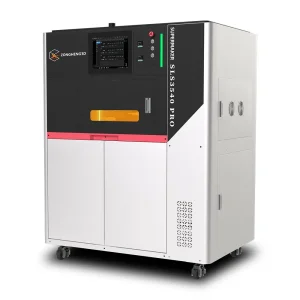
 Diem printer