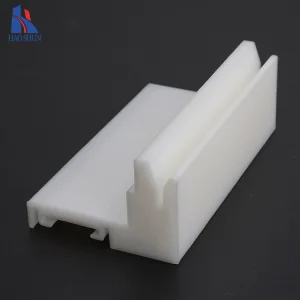
Explore our certified portfolio of integrated industrial polymer and high-precision metallic configurations crafted via design-for-additive-manufacturing (DfAM) methodologies.
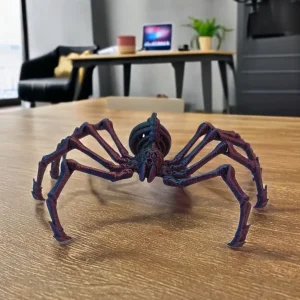
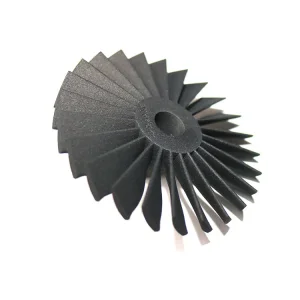
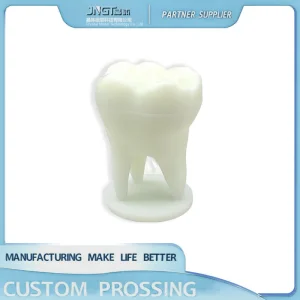
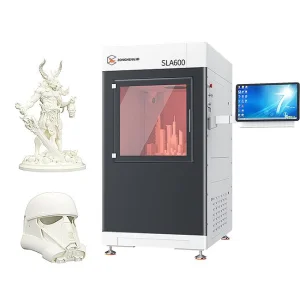
How redefining multi-component mechanical assemblies into singular monolithic configurations shifts supply chain metrics and component physics.
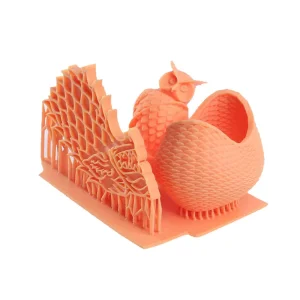
Traditional manufacturing requires machining multiple independent elements that are subsequently coupled via brazing, welding, or threaded fasteners. This introduces geometric stack-up errors, structural weak points, and thermal expansion mismatches. Additive Part Consolidation (APC) leverages Laser Powder Bed Fusion (LPBF) and Selective Laser Sintering (SLS) to fuse intricate components into one unibody file. By substituting complex geometric interfaces with continuous material grain matrix structures, component failure rates drop sharply while internal load transfers become homogeneous.
Managing an assembly consisting of dozens of individual part numbers demands expansive material resource planning (MRP) pipelines, incoming quality inspections, specialized assembly fixtures, and extensive long-term maintenance tracking. Consolidating components reduces the Bill of Materials (BOM) to a single definitive configuration item. Procurement costs decline, production routing drops from several distinct suppliers down to a single additive manufacturing site, and structural tolerances are preserved directly inside the CAD dataset, avoiding field assembly variability.
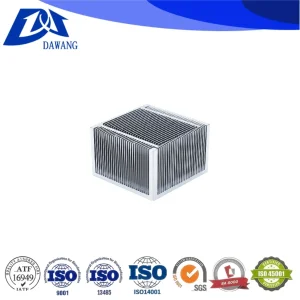
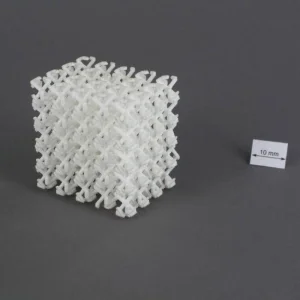
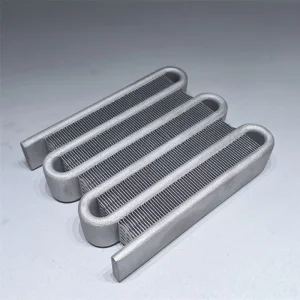
Subtractive drilling cannot create curved internal galleries or self-supporting structural flow bifurcations. With industrial-grade SLS or DMLS additive methodologies, engineers can incorporate complex fluid and gas pathways within integrated structural parts. This completely avoids right-angle drilling intersections that induce high pressure drops and parasitic turbulence. Conformal coolant geometries maximize thermal transmission efficiency in aerospace thermal exchangers and high-performance automotive manifolds, yielding elite hydrodynamic performance.
A decade-long transformation from high-precision equipment design to macro industrial additive manufacturing integrations.
In 2010, Shenzhen Diem Printer Equipment Co., Ltd. was established with a clear vision: not just to manufacture digital printing equipment, but to harness technology to create meaningful value for communities and industries alike. Our mission from the beginning has been to introduce cutting-edge digital printing innovations to the market, while promoting sustainable growth in the technology sector.
Over the years, we have evolved from a small startup into a leading company with a diverse business portfolio. Our team brings together a wide range of skills, innovative thinking, and a shared passion for excellence. By leveraging the unique perspectives and expertise of each team member, we continually push the boundaries of what digital printing and precise fabrication technology can achieve.
At Shenzhen Diem, we are committed to exploring and advancing the frontiers of industrial digital fabrication and material manipulation. Our comprehensive product lineup includes a wide array of digital printers, notably our digital silk screen plate making machines, which are engineered to optimize plant-floor efficiency, simplify intricate assembly workflows, and integrate environmentally friendly practices. Our equipment serves key global industries such as advertising, precision graphics, and packaging, while also supporting sectors like handicrafts, complex electronics, and even specialized power system infrastructure, demonstrating the versatility and deep macro-industry impact of our technology core.
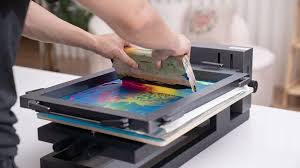
For our key global clients, we provide high-performance silk screen printing solutions and integrated multi-material additive manufacturing validations capable of handling complex and large-scale engineering tasks, empowering operations to meet diverse market demands with deep absolute precision and cross-border structural reliability. We believe that extraordinary achievements happen when people unite around a common purpose: fostering sustainable development where people, businesses, and the environment thrive together.
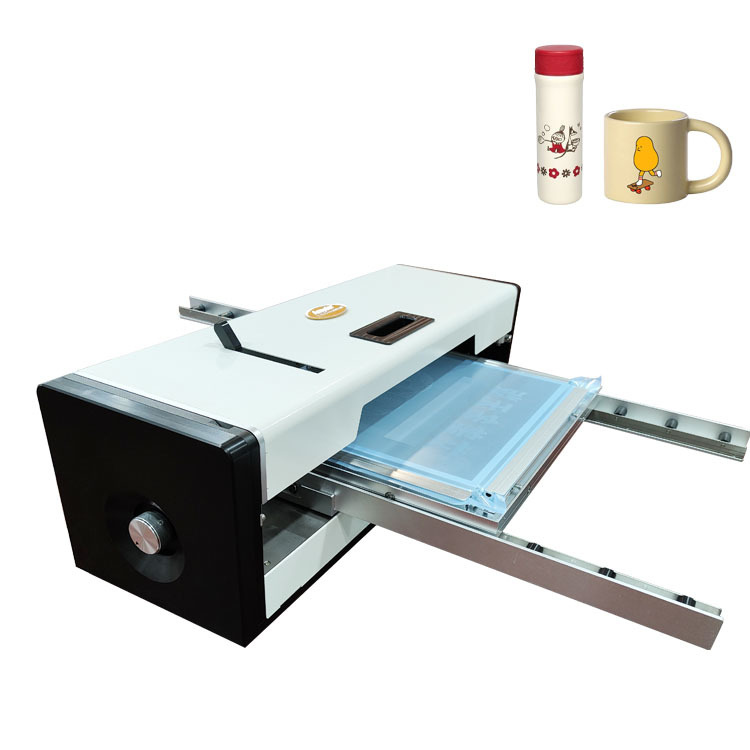
By harnessing collective wisdom and innovative engineering thinking, Shenzhen Diem Printer Equipment Co., Ltd. remains steadfast in our brand promise: Creating Value Together. Through continuous improvement, multi-disciplinary technical cross-pollination, and deep industrial community engagement, we aspire to lead the additive part fabrication and high-precision production industry while ensuring a distinctly positive impact on our worldwide clients' manufacturing pipelines.
Learn More About Us: We didn’t just start a company to produce baseline printers — we started an enterprise to build an integrated manufacturing future. At Shenzhen Diem, every mechanical optimization, every functional machine build, and every collaborative contract production agreement reflects our long-term commitment to delivering unrivaled quality metrics, absolute transparency, and certified compliance to defense, commercial aerospace, medical, and advanced consumer electronic entities globally.
Why China's integrated raw material matrix and hyper-dense industrial infrastructure dictate the economics of large-scale DfAM engineering deployment.
Additive part consolidation requires intensive downstream support extraction, thermal stress relief annealing, high-precision five-axis CNC milling, and dynamic surface finishing. Chinese industrial hubs bring additive fusion cells and advanced CNC machining centers together within a single facility. This eliminates logistical transit delays between distinct processing vendors and maintains tight dimensional controls across complex internal components.
Our production ecosystems support an extensive array of advanced polymers and metallurgy options. This spans high-temperature flame-retardant V0-rated resins, specialized bio-compatible nylon PA12 formulations for medical devices, and high-performance metallic alloys. Our direct links to regional material formulation labs enable rapid, iterative chemical compounding, ensuring optimized mechanical properties for challenging applications.
The specialized regional density of toolmakers, testing labs, and multi-laser system operations in Shenzhen allows for unmatched prototyping agility. Designs requiring topology changes can be revised, simulated via FEA, printed on large-format SLA or multi-laser SLS systems, and delivered to testing engineers within days. This rapid loop accelerates overall time-to-market compared to conventional regional supply lines.
To support critical consolidation applications, Chinese facilities implement comprehensive validation protocols. This includes coordinate measuring machine (CMM) dimensional checks, industrial computed tomography scanning for internal cavity verification, gas-tight pressure tests, and spectrographic material analysis. These rigorous testing steps ensure parts comply fully with AS9100 and ISO9001 frameworks.
The technological developments redefining part consolidation, including multi-laser systems, generative design algorithms, and advanced material layering.
Modern engineering departments are moving beyond manual geometric merging by adopting AI-driven generative design software. By defining structural load boundaries, operational force vectors, thermal limits, and target mass metrics, cloud-based algorithms run through thousands of design variations. The resulting organic geometries can only be produced via industrial additive techniques. This approach places material only where structural load pathways require it, achieving maximal weight reduction and optimal structural strength.
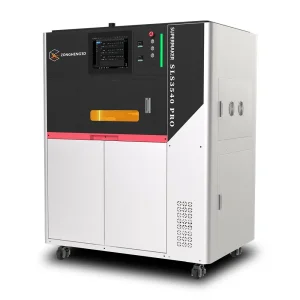
To enable part consolidation for large-scale sub-frames and complex industrial flow housings, the industry relies on large-format powder bed fusion systems. Modern machines employ quad, octal, or multi-laser arrays that scan large build plates simultaneously. Software coordinates laser paths to manage thermal balance across the melting zone, preventing internal stress buildup while maintaining high build rates across large part geometries.
For mission-critical components, real-time quality verification is essential. Modern industrial printing platforms feature in-situ optical monitoring systems that capture high-resolution imagery of every single layer deposition. Computer vision systems scan for anomalies such as powder unevenness, local thermal spikes, or micro-cracking. Any deviations from nominal baselines flag the system, providing unparalleled transparency for high-integrity components.
How part consolidation is applied across major industrial sectors, transforming assemblies into high-reliability components.
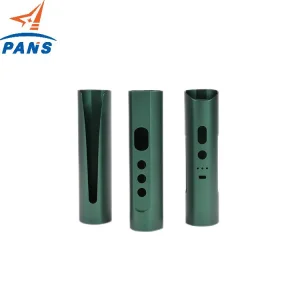
Under-hood components utilize high-temperature, flame-retardant V0-rated polymers and advanced alloys to merge brackets, ducting channels, and sensor housings into single components. This consolidation reduces weight, minimizes fluid leak risks at interface seams, and optimizes packaging space within tight vehicle engine compartments.
Aerospace systems leverage additive part consolidation to replace traditional multi-component hydraulic blocks and fuel manifolds. Consolidating these assemblies eliminates heavy fastening flanges and brazed joints, reducing weight while improving fluid dynamics and pressure consistency across critical flight systems.
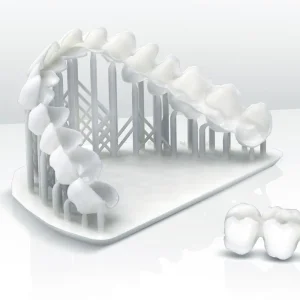
Patient-specific dental surgical guides and orthopedic implants combine structural support elements with porous, biomimetic lattice surfaces in a single print. This integration improves osseointegration and ensures high dimensional accuracy, streamlining complex clinical procedures.
Macro-Industry Logistics Resolution: By working with a centralized production partner like Shenzhen Diem, global enterprises can shift from managing extensive regional component supplier networks to a single, high-fidelity digital master source. This transformation lowers overall tracking costs, reduces internal quality validation overhead, and minimizes field failure rates across complex mechanical assemblies.
Key quality metrics and verification benchmarks for cross-border engineering teams sourcing additive consolidated components.
Consolidated parts often feature complex internal features that cannot be verified by standard micrometers. Sourcing specifications require full coordinate measuring machine (CMM) profiling, non-destructive industrial computed tomography (CT) scans, or high-accuracy blue-light 3D scanning to confirm compliance with target CAD specifications.
Raw additive surfaces often exhibit micro-roughness that can compromise fatigue performance under cyclic loads. Global procurement standards mandate precise surface treatments, specify Ra roughness limits, and require targeted post-machining for critical interface surfaces.
High-integrity sectors require full material traceability. Processing lots must include chemical composition certification, particle size distribution reports, batch tracking for powders or resins, and mechanical testing validation data from parallel test specimens.
Technical answers to common questions regarding engineering principles, quality assurance, and manufacturing workflows for part consolidation.
Review our specialized hardware systems, subtractive integration capabilities, and advanced materials designed for complex industrial applications.
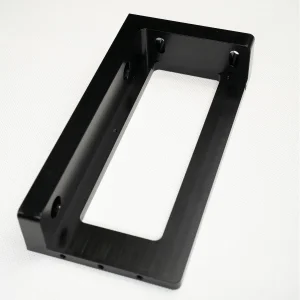
 Diem printer