In 2026, print buyers often need modest quantities, quick revisions, and consistent results without ordering thousands of copies. A local café might need 300 menus for a seasonal launch, while a small publisher may test a new cover before committing to a larger edition. Digital printing can suit these jobs because it typically avoids printing plates and reduces setup steps. That can mean a shorter path from approved file to finished stack. Less setup. The practical question is: Why are digital printers more efficient for short runs? The answer involves more than speed; it also depends on waste, workflow, and the job’s specifications.
Digital systems can make economical sense when each copy needs a different name, image, or version. They also support smaller orders, which may help businesses avoid storing unused inventory. Still, the lowest quoted price is not always the lowest total cost. Paper choice, finishing, color requirements, and delivery schedules all affect the result. A detailed estimate and a printed proof can expose issues that a screen preview may miss. A small caveat matters: digital output may not match every large-format or specialty job as well as other processes. This guide examines where digital printing delivers practical advantages, what limits to check, and how buyers can compare options using run length, turnaround, and finished quality—not marketing claims alone.
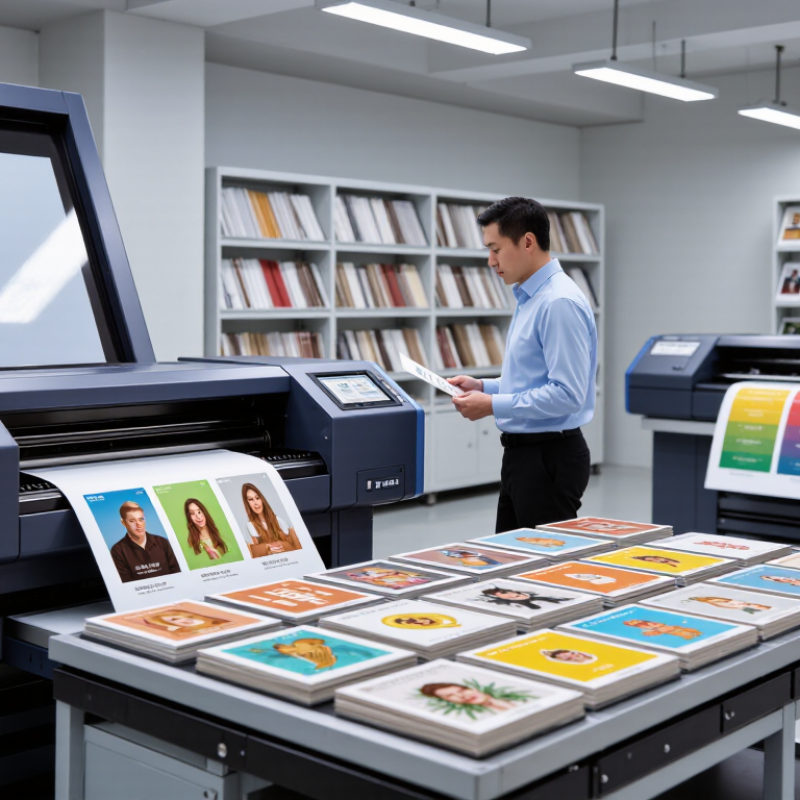
Why Are Digital Printers Best for Short Runs in 2026?
Defining Short-Run Print: How Quantity Shapes Cost Per Copy
A short run is not defined by one universal number. It depends on the job, the equipment, and what each finished copy must include. For a small batch of 80 workshop manuals, digital printing may avoid the setup costs associated with traditional plate-based production. That can make the price per copy more manageable.
Quantity changes the calculation. Digital jobs usually require less preparation, so the initial cost is spread across fewer copies. With 100 booklets, that matters. At several thousand, another print method may become less expensive per copy because its setup cost is shared across a larger order. The crossover point varies with paper, color coverage, binding, and finishing. There is no magic cutoff.
A practical estimate should compare the total price, not just the quoted unit rate. Ask whether proofs, trimming, or delivery are included. A 120-page booklet with a matte cover can cost more than a simple flyer, even at the same quantity. Small runs also make revisions easier: update a date or a price without storing obsolete stock. Still, digital is not automatically the best choice. Color matching can vary, and specialty finishes may narrow the options. This rule is useful, but not perfectly tidy. Get a sample when appearance matters.
Short-run printing is often decided before the first sheet comes off the press. Digital workflows skip plate production, reducing setup steps and material waste on small jobs. No plates. Less setup. A café can order 120 seasonal menus without storing hundreds of outdated copies. Variable data also makes names, dates, or local offers practical to personalize. The trade-off is real: at higher volumes, conventional printing may deliver a lower cost per copy.
Smithers forecasts the global digital print market will reach $230.5 billion by 2032. That figure signals expanding demand, not guaranteed profits for every print shop. Market forecasts also depend on what they count, such as printed output or related services. Buyers should compare turnaround, finishing, and total job cost—not just the quoted page price. A short run may save storage and reduce obsolete stock, but frequent tiny orders can still create handling costs. That part is easy to overlook. For a print manager, the useful question is simple: does plate-free setup make this specific job faster, fresher, or less wasteful?
The break-even point depends on setup charges, waste, finishing, and the quoted cost per impression—not order size alone. Smithers’ report The Future of Digital Printing to 2032 valued the global digital print market at $136.7 billion in 2022 and forecast $230.5 billion by 2032. That growth reflects expanding short-run applications, but it does not make digital cheaper for every job.
Consider a transparent quote model, not an industry average. If offset setup costs $450 and each finished copy costs $0.07, a 1,000-copy order totals $520. If digital setup costs $40 and each copy costs $0.18, the same order totals $220. Digital’s higher unit cost is outweighed by its lower setup charge. With these assumptions, the break-even point is about 3,727 copies: ($450 − $40) ÷ ($0.18 − $0.07). That matters.
Request comparable quotes with paper, trimming, coating, and spoilage included. A low press price can shift costs elsewhere. Check the quote. A 3,000-copy brochure with several versions may still favor digital, since each version avoids new plates and excess inventory. A single-color, 8,000-copy flyer may favor offset if setup is efficient. Recalculate when paper prices or finishing requirements change.
In 2026, digital printing makes short runs practical when every copy needs a small change. A shop can update the print file instead of producing a new plate for each version. That saves setup time. It also reduces the cost of testing several layouts in modest quantities.
A run of 300 event flyers, for example, might include different dates, venue details, or regional offers. Variable-data workflows can place these changes automatically while keeping the main design consistent. On the press sheet, one flyer may show a Friday session, while the next lists Saturday. No plate swap is needed. This is useful for product labels, local mailers, and training materials with language-specific details.
The benefit depends on careful preparation. Each data field should be checked for spelling, spacing, and missing values before printing. A long location name can crowd a line, even when the template looked clean. Small details count. I have seen teams focus on setup speed and underestimate proofing time; that can turn a quick run into a costly reprint. Digital output is not automatically perfect, but a sample check and a clear data file make variable versions easier to manage.
Why Are Digital Printers Best for Short Runs in 2026?
Checking the Limits: Unit Cost, Materials, Speed, and Finishing at Scale
Digital printing can make short runs practical because each copy needs little or no plate setup. That can reduce setup costs and make late artwork changes easier. But a lower setup cost does not guarantee the lowest price per unit. Paper choice, ink coverage, finishing, and delivery deadlines all affect the quote. For larger orders, compare the total cost with other print methods rather than assuming digital will remain cheaper.
Material limits matter. Some presses handle textured stocks, heavy boards, or specialty finishes less consistently than standard coated paper. Ask for a physical sample using the intended stock, especially when color matching or folding is important. Speed also depends on the whole workflow: a fast press cannot help if trimming or binding creates a queue. Small runs shine. At scale, finishing capacity may become the bottleneck, and reprints can erase savings.
Tips: Request an itemized quote for two or three quantities, including finishing and shipping. Confirm stock availability and turnaround time in writing. Check a production sample before approving a large batch. One caveat: estimates can miss real-world delays, so leave some schedule room.
Checking the limits: unit cost, materials, speed, and finishing at scale
How to read this: Ratings are directional, qualitative assessments—not measured industry benchmarks. Digital printing often suits short runs and variable content because it avoids plate setup; offset can become more cost-effective at higher volumes. Substrate compatibility, speed, and finishing depend on the equipment and job specification.
There is no universal cutoff. An 80-copy batch of workshop manuals may suit digital printing, depending on equipment, paper, and finishing. The number alone can mislead.
It avoids plate production and reduces setup steps. A café can order 120 seasonal menus without storing hundreds of outdated copies. Less setup. Less waste. Not always cheaper.
At several thousand copies, setup costs can be shared across more units. The crossover depends on paper, color coverage, binding, and finishing. Compare actual quotes.
Compare total costs, including proofs, trimming, finishing, and delivery. A 120-page booklet with a matte cover may cost more than a flyer at the same quantity. Easy to miss.
Yes. You can update a date, price, or local offer without keeping obsolete stock. But frequent tiny orders may add handling costs. That trade-off deserves another look.
Request a physical sample on the intended stock. Textured paper, heavy boards, and specialty finishes may behave inconsistently. Color matching can vary. A screen is not proof.
No. Trimming or binding can create a queue after printing. Confirm stock availability and turnaround in writing, then leave schedule room. Delays happen.
One forecast estimates the global digital print market will reach $230.5 billion by 2032. It signals demand, not guaranteed savings for every job. Forecasts depend on what they count.
Short-run printing involves producing limited quantities, where setup costs can matter more than the price of each additional copy. Digital printing avoids the plates required by offset methods, reducing preparation time and expense for small orders. Industry forecasts point to continued growth in digital print, with the market projected to reach $230.5 billion by 2032. For customers ordering a few dozen or a few hundred copies, digital production can often reach its break-even point sooner because it requires less upfront investment.
Why are digital printers more efficient for short runs? They can print on demand and create multiple versions, such as personalized text or different layouts, without making new plates. However, digital printing is not always the lowest-cost choice: unit prices, available materials, production speed, and finishing options may become limiting as quantities rise. Comparing these factors helps determine when to choose digital printing and when a larger-scale process may be more suitable.

Diem printer