3D printing, also known as additive manufacturing, has transformed several industries today. This technology allows for precise production, customization, and reduced waste. As companies seek efficiency and innovation, they increasingly ask, "what industries use 3D printing the most?"
From healthcare to aerospace, various sectors have embraced this method. In healthcare, 3D printing produces implants and prosthetics tailored to patient needs. The aerospace industry utilizes it for complex engine parts, improving fuel efficiency. Automotive manufacturers use this technology to create prototypes faster and at a lower cost.
Despite its advantages, challenges persist. The cost of high-end printers remains a barrier for some. Regulatory issues occasionally slow down adoption in certain sectors. Companies must navigate these complexities to fully realize 3D printing's potential. Exploring the top industries dominating 3D printing today reveals not just opportunities but also areas needing improvement.
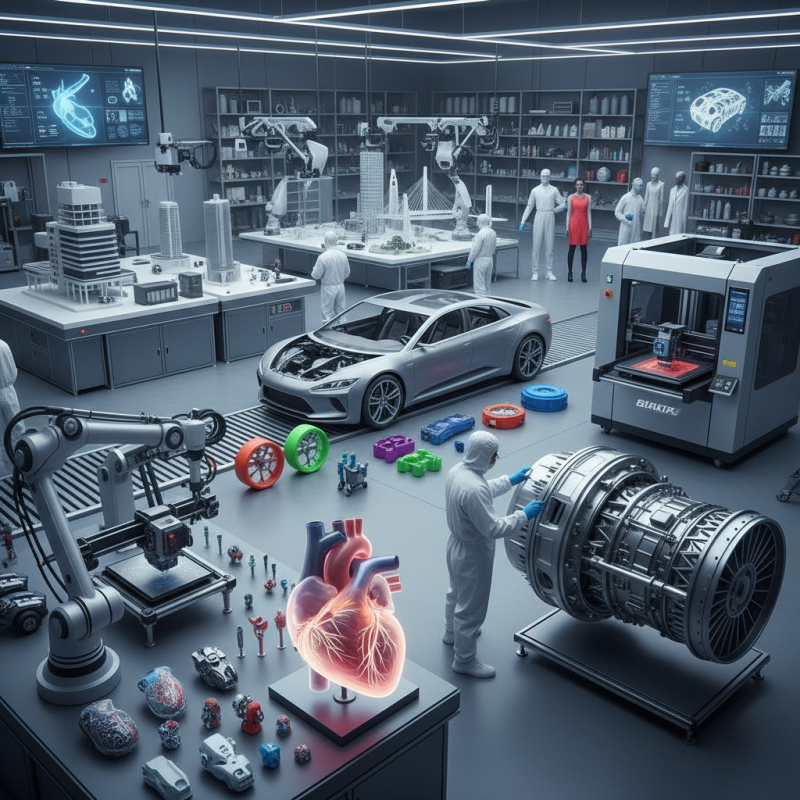
3D printing technology has transformed various industries over the past few decades. Initially limited to prototyping, it has evolved dramatically. Today, it allows for the production of complex geometries that traditional methods cannot achieve. This capability significantly reduces waste and production costs. The applications range from medical implants to automotive parts, showcasing its versatility.
As 3D printing continues to mature, challenges remain. Quality control, material limitations, and post-processing are areas requiring improvement. Many companies struggle with inconsistent results, leading to questions about reliability. Exploring new materials could pave the way for enhanced functionality and wider adoption.
The evolution of 3D printing speaks to its potential. However, it demands continuous innovation and adaptation. The industry's growth invites both optimism and caution. Embracing these challenges will be crucial for future advancements. The journey has just begun, and the future remains uncertain yet promising.
This chart shows the percentage share of various industries utilizing 3D printing technology. The data indicates the most significant sectors leveraging this innovative technology for their manufacturing processes and product development.
The 3D printing industry is experiencing rapid growth due to various key factors. One major driver is the demand for customization across sectors like healthcare and aerospace. According to a recent market analysis, the global 3D printing market is projected to reach $34.8 billion by 2024. This growth is fueled by advancements in materials and technology.
Another significant factor is the efficiency brought by 3D printing. Companies can reduce production times and minimize waste. Many organizations report cutting costs by up to 70% when switching to additive manufacturing. This efficiency enables businesses to remain competitive in a fast-paced market.
Tips: Consider how your industry can implement 3D printing. Identifying specific use cases can enhance your operations. Stay updated on technology trends to avoid falling behind. Regularly review your processes for areas where 3D printing can drive improvement.
The healthcare industry is experiencing a transformation due to 3D printing technology. This innovation is making significant strides in creating medical devices and prosthetics. According to a report by Smartech Analysis, the global 3D printing medical market is projected to reach over $6 billion by 2027. This growth reflects the industry's acknowledgment of the benefits of custom, patient-specific solutions.
3D printing allows for production that caters to individual anatomy, enhancing the fit and comfort of prosthetics. For instance, researchers from Cornell University demonstrated that custom 3D-printed prosthetic limbs could reduce overall costs by up to 90%. However, despite the advantages, there are challenges. The regulatory landscape is complex. Ensuring safety and efficacy remains crucial and requires rigorous testing.
Another aspect to consider is material limitations. While advancements are underway, specific biomaterials still have inadequacies. Creating durable and biocompatible materials that can withstand various medical applications is essential. Moreover, the ethical implications of using bioprinted tissues present new dilemmas. Balancing innovation with ethical standards requires continuous reflection and dialogue within the sector.
Aerospace has increasingly adopted 3D printing technologies. These innovations greatly enhance design efficiency. By utilizing additive manufacturing, companies can create complex geometries that traditional methods struggle to achieve. The result is a lighter weight, which is crucial in aviation.
According to a report by Deloitte, the aerospace sector could see significant cost savings. Up to 30% reduction in part weight can be realized. This reduction contributes to fuel efficiency, leading to lower operational costs. Moreover, 3D printing streamlines the supply chain, enabling on-demand production. This shifts the focus from large inventories to leaner operations.
However, challenges remain. The technology is still maturing, and not all materials are suitable for aerospace applications. Additionally, regulatory hurdles can slow down the adoption process. Industry experts emphasize the importance of rigorous testing and validation. While there are clear advantages, the path forward requires cautious steps. The aerospace sector must balance innovation with safety and effectiveness.
As the automotive industry evolves, 3D printing emerges as a key player. It is revolutionizing manufacturing efficiency and customization. According to recent reports, 3D printing can reduce production costs by up to 30%. This statistic highlights its impact on operational efficiency.
Customization is another significant advantage. Manufacturers can create unique parts tailored to specific needs. A survey found that 70% of automotive companies are investing in 3D printing for this reason. It enables tailored solutions that traditional methods cannot match. Customers now expect personalized vehicles, and 3D printing meets this demand.
However, challenges persist. Quality control remains a concern, as printed components may not always meet the required specifications. The technology is evolving, but inconsistency in material properties can lead to unforeseen issues. Moreover, the initial investment in 3D printing technology can be high. Companies must weigh these costs against the long-term savings and advantages.
| Dimension | Value |
|---|---|
| Market Size (2023) | $8 Billion |
| Growth Rate | 25% annually |
| Key Applications | Prototyping, Custom Parts Production |
| Materials Used | Plastics, Metals, Composites |
| Key Benefits | Reduced Waste, Rapid Production, Design Flexibility |
| Challenges | Cost of Equipment, Material Limitations |
| Top Regions Using 3D Printing | North America, Europe, Asia Pacific |
| Percentage of Custom Parts | 40% of total production |
| Future Trends | Integration with AI, Advanced Material Development |
: It is a method that creates three-dimensional objects from digital models. It has changed many industries significantly.
Initially used for prototyping, it now produces complex shapes with reduced waste. This lowers costs across various fields.
Applications include medical devices, automotive parts, and various custom solutions. The technology shows great versatility.
Quality control and material limitations persist. Inconsistent results can lead to reliability issues for many companies.
It allows for customized medical devices and prosthetics that better fit individual needs, improving comfort and effectiveness.
The regulatory landscape is complicated. Ensuring the safety and efficacy of new devices requires extensive testing and approval.
Many existing biomaterials lack durability and biocompatibility. This limits their application in medical contexts and needs improvement.
Ethical issues arise from the use of bioprinted tissues. Striking a balance between innovation and ethics is vital for progress.
The journey of 3D printing is ongoing and uncertain. Continuous innovation and adaptation will be needed for future success.
Companies must address material choices and focus on achieving consistent quality and reliability for better outcomes.
3D printing technology has undergone significant evolution, positioning itself as a transformative force across various sectors. Today, key industries that dominate the landscape of 3D printing include healthcare, aerospace, and automotive. In healthcare, 3D printing is revolutionizing the creation of medical devices and prosthetics, allowing for more personalized and efficient solutions. Meanwhile, aerospace companies leverage this technology to enhance design efficiency and reduce the weight of components, leading to improved performance and fuel efficiency.
The automotive industry is also experiencing a paradigm shift through 3D printing, streamlining manufacturing processes and enabling customization that meets consumer demands. Overall, these sectors exemplify what industries use 3D printing the most, showcasing the technology's potential to drive innovation and efficiency across different applications. As the technology continues to evolve, its impact on these industries is set to grow even further.

Diem printer