The discussion around whether "is 3D printing cheaper than manufacturing" has gained momentum in recent years. According to a report by Wohlers Associates, the global 3D printing market is projected to reach $34.8 billion by 2024, reflecting a significant shift in manufacturing paradigms. Many often assume that 3D printing is a cost-effective alternative, particularly for small production runs. However, this assumption warrants closer examination.
Traditional manufacturing methods, like injection molding, excel in mass production efficiency. For instance, tools and molds can require high upfront costs, but they become economical for larger production volumes. On the other hand, 3D printing offers flexibility and rapid prototyping advantages. The cost of materials and time can sometimes create a financial disparity favoring traditional methods for high-volume needs.
Moreover, there are specifics where 3D printing might not be the bargain it seems. Some studies indicate that while initial costs appear lower, post-processing, finishing, and higher material expenses can add to the total. The answer to the question is multifaceted. It may depend on the quantities, material types, and the required quality. As we delve deeper, a clearer picture will emerge, revealing both the strengths and weaknesses of 3D printing.
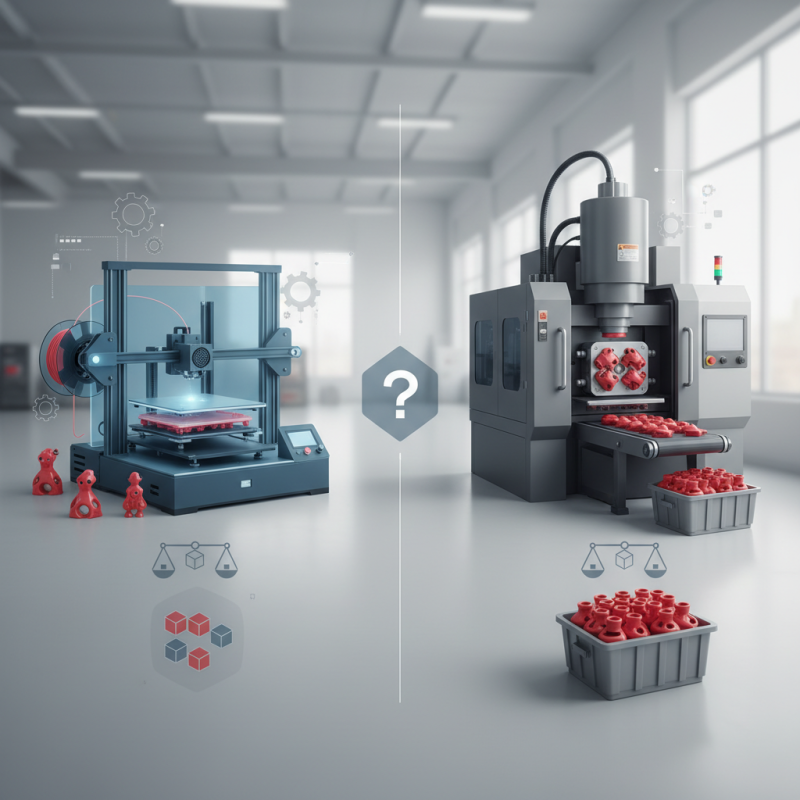
Comparison of Initial Costs: 3D Printing vs. Traditional Manufacturing
When comparing initial costs, 3D printing often presents a different financial picture than traditional manufacturing. The setup costs for conventional methods can be steep. Factories require extensive tooling and molds, which can take significant time and resources. A single mold could cost thousands, making small production runs less appealing.
In contrast, 3D printing eliminates these costs. With additive manufacturing, designs can be altered easily without the need for new tools. This flexibility shines in small-scale projects. For example, a custom part can be printed for much less than molding it. However, the price of materials for 3D printers can add up. Not every material is suitable for every project.
Yet, the true challenge lies in the quality of the printed items. Some products may lack the finish of traditionally manufactured goods. Understanding the balance between cost and quality is essential. Even with lower initial costs, the durability of a 3D printed object must be evaluated. It's clear that while 3D printing can simplify costs, a careful assessment is necessary.
Is 3D Printing Cheaper Than Traditional Manufacturing Solutions? - Comparison of Initial Costs: 3D Printing vs. Traditional Manufacturing
| Manufacturing Method |
Initial Setup Cost (USD) |
Material Costs (USD/kg) |
Production Time (hours) |
Flexibility in Design |
| 3D Printing |
$5,000 - $20,000 |
$20 - $150 |
1 - 5 |
High |
| Injection Molding |
$30,000 - $100,000 |
$1.50 - $20 |
24 - 48 |
Low |
| CNC Machining |
$10,000 - $50,000 |
$10 - $100 |
5 - 20 |
Moderate |
Material Costs: Analyzing Expenses between Both Manufacturing Methods
In recent years, 3D printing has emerged as a vital technology in manufacturing. A key aspect is its material costs. Traditional manufacturing often requires bulk raw materials. This can lead to higher expenses. Companies invest heavily in materials that may not be fully utilized. Waste is a significant concern in conventional methods.
3D printing, on the other hand, allows for more precise material usage. It utilizes only what is needed for each part. This can reduce material waste drastically. However, some specialty materials for 3D printing can be costly. The initial investment in 3D printers might also offset some of these savings.
Evaluating both methods reveals complexities. The cost-effectiveness of 3D printing may depend on the production volume. For small runs, 3D printing shines, but traditional methods may be cheaper for large batches. Each method has its drawbacks. Understanding these nuances is crucial before choosing the right manufacturing approach.
Production Time Efficiency: How Speed Impacts Overall Cost
3D printing has gained popularity for its speed and adaptability. Traditional manufacturing can take weeks, while 3D printing often produces parts in days, or even hours. This rapid turnaround affects overall cost efficiency. Businesses miss out if they ignore the implications of time savings. Faster production means quicker go-to-market strategies.
However, the speed of 3D printing doesn't always translate to cost savings. High initial setup costs can offset the benefits. For instance, complex designs that require extensive support structures can drive up expenses. Material waste is another issue. Sometimes, the faster you produce, the more you lose in unused material.
There's also a learning curve. Using 3D printing requires skilled professionals who understand the technology. Businesses must invest in expertise, which can deter smaller companies. While the allure of efficient production is strong, it’s essential to weigh these factors carefully. In some cases, traditional methods might still hold an edge. The debate around 3D printing versus traditional manufacturing continues, with no clear winner in every scenario.
Long-Term Cost Benefits: Maintenance and Waste Reduction in 3D Printing
3D printing is revolutionizing manufacturing by offering long-term cost benefits. One significant advantage is reduced maintenance costs. A study from the Wohlers Report indicates that businesses using 3D printing can cut tooling costs by up to 90%. This reduction leads to less downtime and minimal maintenance. The technology allows for rapid prototyping, which means businesses can swiftly iterate designs without incurring excessive costs.
Another advantage is waste reduction. Traditional manufacturing often results in substantial material waste. According to a report by the National Institute of Standards and Technology, subtractive manufacturing processes can waste approximately 50% of materials. In contrast, 3D printing uses additive techniques, which only produce what is necessary. This efficiency not only saves money but also contributes to sustainability. Less waste aligns with the growing demand for environmentally friendly practices in manufacturing.
Tips for businesses considering 3D printing: Evaluate your production needs to see if the technology fits. Consider starting with small projects to minimize risk. It's vital to stay updated on advancements in 3D printing materials and methods. Continually reassess your processes for improvement. Understanding these factors can enhance your decision-making in adopting 3D printing as a viable manufacturing solution.
Case Studies: Industries Where 3D Printing Outperforms Traditional Methods
3D printing has gained traction across various industries as a viable alternative to traditional manufacturing. In healthcare, custom prosthetics manufactured through additive technology reduce costs and speed up production. A study showed that 3D printing prosthetics can be up to 70% cheaper than conventional methods. This shift enhances patient outcomes while making healthcare more accessible.
In the aerospace sector, lightweight components created via 3D printing streamline operations. Parts can be produced with complex geometries that traditional machining cannot achieve. This leads to lower fuel consumption and overall savings. However, the initial investment in 3D printing technology may be high, causing some companies to hesitate despite long-term benefits.
Moreover, the flexibility of 3D printing allows for rapid prototyping. Companies can test designs without the risk of expensive retooling. However, challenges remain regarding material limitations and production speed. Not every item is suitable for 3D printing, and some traditional methods still offer better efficiency. Balancing these factors is essential for businesses aiming to optimize their manufacturing processes.
FAQS
: Traditional manufacturing often leads to higher material expenses due to bulk purchases. There is also significant waste involved in this method.
3D printing uses only the required materials for each part. This can greatly reduce material waste compared to traditional methods.
Yes, some specialty materials can be costly. The initial investment in 3D printers can also offset potential savings.
3D printing tends to be more cost-effective for small production runs. Traditional methods may be cheaper for large batches.
3D printing allows for faster production, which can enhance cost efficiency. Quicker production can lead to faster market entry.
Not always. High setup costs and complexity can increase expenses, sometimes leading to more material waste.
Skilled professionals with knowledge of 3D printing technology are essential. This expertise can be a barrier for smaller businesses.
It depends on the situation. Each method has pros and cons, and careful consideration is necessary to choose the best approach.
Sometimes, faster production results in greater material waste. This can contradict the goal of cost savings.
No, the debate continues. Each method has its advantages, and the choice often depends on specific project requirements.
Conclusion
The article "Is 3D Printing Cheaper Than Traditional Manufacturing Solutions?" examines the comparative costs associated with 3D printing and conventional manufacturing methods. It starts by analyzing initial costs, highlighting that while 3D printing may have higher upfront expenses due to equipment, it can lead to significant savings in material costs over time. The efficiency in production time is also discussed, demonstrating how the rapid prototyping capabilities of 3D printing can lower overall costs by speeding up the manufacturing process.
Furthermore, the long-term cost benefits of 3D printing, such as reduced maintenance and waste, are explored, showing how these factors contribute to its economic viability. By presenting case studies from various industries, the article substantiates its findings that in many scenarios, 3D printing does indeed outperform traditional methods, ultimately addressing the critical question: is 3D printing cheaper than manufacturing?

 Diem printer