In today's business landscape, custom 3D printing is transforming how products are created. Companies are increasingly asking, "how does custom 3D printing service work?" This technology allows for rapid prototyping and tailored solutions. It enables businesses to produce unique items that meet specific needs.
3D printing services begin with a design. This can be developed from scratch or adapted from existing models. Special software transforms these designs into a format suitable for printing. Next, high-tech printers layer materials to build objects. These can range from simple prototypes to complex components.
However, businesses must consider quality and precision. While the technology is advanced, it can have limitations. Variability in materials and printing methods may affect outcomes. Therefore, collaboration with experienced professionals is crucial. They ensure that the final product aligns with your expectations and requirements. Understanding this process can greatly impact your business strategy.
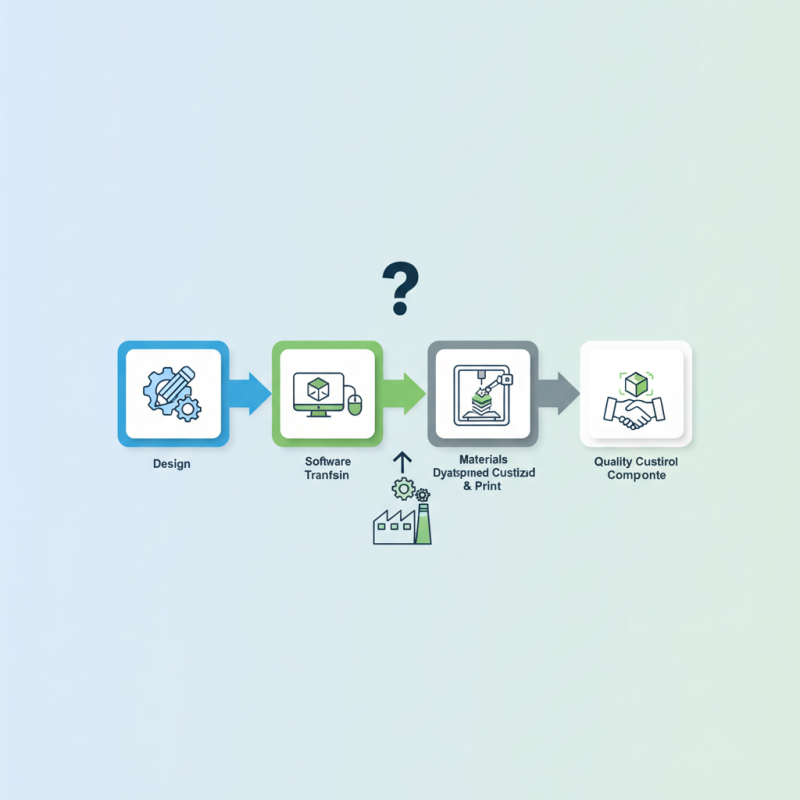
Custom 3D printing services offer businesses unique advantages. These services provide tailored solutions, enabling companies to create prototypes, parts, or products that meet specific needs. According to a report by Wohlers Associates, the 3D printing industry is projected to grow to $34.8 billion by 2024, highlighting its increasing relevance. Companies are embracing this technology to optimize design flexibility and reduce waste.
Customization is a key benefit. Traditional manufacturing often limits design possibilities. However, 3D printing allows for complex geometries and innovative designs. For instance, a study from SmarTech Analysis found that the aerospace sector is expected to leverage 3D printing for over 20% of its parts by 2025. This shift demonstrates how industries are transforming their production processes.
Despite these advantages, challenges persist. The technology can be costly initially. Furthermore, quality control remains a crucial concern. Businesses must invest time to understand material properties and printing capabilities. Continuous learning is essential to harness the full potential of custom 3D printing. Adapting to this technology requires a willingness to experiment and refine processes.
| Feature | Description | Benefit |
|---|---|---|
| Rapid Prototyping | Quickly create prototypes to test designs. | Speeds up product development cycles. |
| Customization | Tailor products to specific customer requirements. | Enhances customer satisfaction and loyalty. |
| Material Variety | Choose from numerous materials like plastics, metals, and ceramics. | Allows for innovative and functional designs. |
| Cost Efficiency | Reduce costs associated with traditional manufacturing. | Enables budget-friendly prototyping and manufacturing. |
| Complex Geometries | Create intricate designs that are difficult to achieve with other methods. | Offers competitive advantages and unique products. |
: Custom 3D printing offers tailored solutions, design flexibility, and waste reduction. It's ideal for prototypes and unique products.
3D printing expands design possibilities. It supports complex geometries, which traditional methods cannot easily achieve.
Initial costs can be high. Quality control is vital, and understanding materials is essential for successful outcomes.
Different materials affect strength, weight, and finish. The right choice impacts the overall performance of the final product.
Clear project outlines help identify needed materials. Costs vary by design complexity; flexibility in budgeting is crucial.
Prioritizing price over quality can lead to higher expenses later. Consider hidden costs like shipping and setup fees.
Collaboration with skilled designers enhances outcomes. Feedback helps refine designs, but not all ideas work on the first attempt.
Iteration involves prototyping and testing designs. It allows businesses to identify flaws and make necessary adjustments.
Continuous learning and experimentation are key. Reflecting on failures can drive innovation and better results over time.
Compare different service providers. Assess their capabilities and pricing to find a suitable fit for your project's needs.
Custom 3D printing services provide businesses with innovative solutions by enabling them to create tailored products and prototypes. Understanding how custom 3D printing service work involves examining the benefits, which include enhanced design flexibility and reduced production time. The design process is crucial to success, allowing businesses to translate ideas into printable models using specialized software. Various materials and advanced technologies play a significant role in the quality and functionality of printed items.
When considering cost, businesses must budget for design, material selection, and production processes. Case studies illustrate how successful implementations of custom 3D printing have transformed industries, showcasing real-world applications and outcomes. Overall, companies can leverage these services to gain a competitive edge by harnessing the potential of specialized 3D printing tailored to their needs.

 Diem printer