3D printing has revolutionized various industries, but it is not without its challenges. Experts often face a recurring question: "why do 3D prints fail sometimes?" Andrew Smith, a leading figure in additive manufacturing, captured this dilemma succinctly: "Even the most advanced technology falters if not understood fully."
Failures can stem from multiple factors. Material quality plays a critical role. Poor filament or resin can lead to brittle prints. Printer settings also significantly affect the final output. For instance, incorrect temperature or speed can compromise layer adhesion. A common mistake is underestimating the environmental conditions. Humidity and temperature fluctuations can wreak havoc on prints.
Reflecting on these issues, it becomes clear that awareness and technical mastery are crucial. Many new users overlook simple checks before starting a project. Such oversights can result in wasted materials and time. Addressing these common issues paves the way for more successful prints and a deeper understanding of the intricate processes involved in 3D printing.
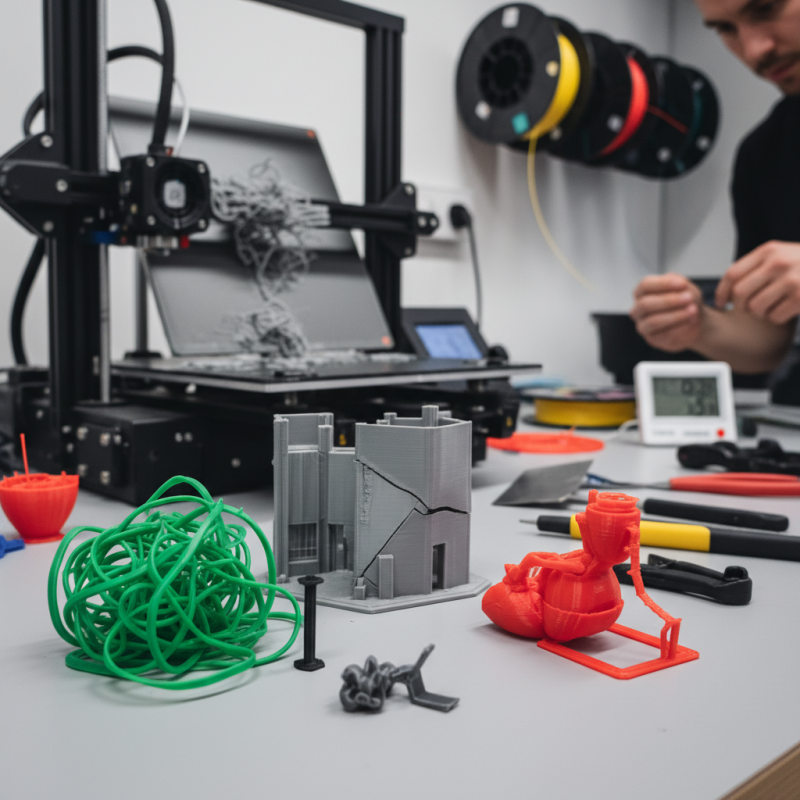
3D printing can be an exciting venture, but failures can happen. Understanding common causes of 3D print failures is crucial for improvement.
One frequent issue is poor adhesion to the print bed. If the first layer isn’t sticking well, everything might fail. This can result from a dirty bed or an improperly leveled surface. Ensure that the bed is clean and leveled correctly.
Another common problem is insufficient temperature settings. If the nozzle is too cool, the filament won’t melt properly. Likewise, if it’s too hot, the filament may become too fluid, leading to blobbing. Testing different temperatures can help find the optimal setting for your material.
Tips: Always calibrate your printer before starting a project. Adjusting settings slightly can make a big difference in print quality. Pay attention to filament compatibility; not all filaments behave the same in every printer. Capture these nuances to improve your results and reduce failure rates.
Material choice plays a vital role in the success of 3D prints. Various materials exhibit unique properties, which can greatly influence print quality. For instance, PLA is known for its ease of use, but it can warp under higher temperatures. ABS offers strength but often requires careful temperature control to prevent cracking. Users must understand these properties to avoid disappointment.
Moreover, material moisture content is crucial. Filaments like nylon are hygroscopic and can absorb moisture, leading to poor extrusion. This can result in bubbles or inconsistent layering in prints. It's essential to store filaments properly and dry them before use. This small detail greatly affects the outcome, yet many overlook it.
Overall, understanding material-related issues can save time and resources. Learning from failures is part of the 3D printing journey. Each unsuccessful print can teach valuable lessons about material behavior and printer settings. Emphasizing this understanding can significantly enhance print reliability.
| Issue | Description | Material Type Affected | Solutions |
|---|---|---|---|
| Stringing | Unwanted threads of plastic that occur when the nozzle moves between sections of a print. | PLA, PETG | Adjust retraction settings, increase travel speed. |
| Warping | The corners of the print lift off the bed as it cools. | ABS, Nylon | Use a heated bed, increase bed adhesion methods. |
| Under-Extrusion | Insufficient material being pushed through the nozzle, leading to gaps in the print. | All filaments | Check for clogs, adjust flow rate, clean the nozzle. |
| Layer Separation | Layers do not adhere properly, causing prints to delaminate. | ABS, PETG | Increase print temperature, ensure proper cooling. |
| Bubbling | Bubbles form in the filament causing uneven extrusion. | PLA, PETG | Dry filament before printing, store properly. |
Printer calibration is crucial in 3D printing. If done incorrectly, you might face several issues that lead to print failures. A common problem is bed leveling. An unlevel bed can cause the first layer to not adhere properly. This can lead to warping and detachment during printing.
Another aspect is extruder calibration. If the extruder is over or under-extruding, your print can either fail entirely or come out with poor quality. It's essential to measure the filament diameter accurately. This small detail makes a big difference in achieving precise results.
Temperature settings also play a significant role. If the nozzle temperature is too high, you risk stringing and oozing issues. Too low, and the filament may not flow properly. These calibration aspects need regular checks. Consistency is key for successful prints. A few minutes spent on calibration can save hours of printing time wasted on failures. Reflecting on these factors can significantly improve your 3D printing experience.
Environmental factors play a crucial role in the success of 3D printing.
Temperature fluctuations can lead to warping and layer adhesion issues. A study by the American Society of Mechanical Engineers highlighted that an optimal ambient temperature is critical for many thermoplastics. Deviations can cause failed prints or structural weaknesses.
Humidity is another factor that shouldn’t be overlooked. High humidity can lead to filament absorption, resulting in weakened prints. According to the Journal of Materials Science, filaments exposed to moisture lose their mechanical properties. Many 3D printing enthusiasts report increased failures in high-humidity environments, often needing to use desiccants for filament storage.
Dust and particulate matter can compromise print quality. Contaminants can affect adhesion and cause surface imperfections. Research shows that a clean workspace leads to higher success rates in prints. Failing to maintain a dust-free environment may lead to unnecessary print failures, urging users to be more vigilant. Recognizing these environmental influences can help mitigate failures in 3D printing.
Design flaws are a significant issue in 3D printing. Even small mistakes can lead to failed prints. Common problems include poor dimensional accuracy and weak structural integrity. These often stem from inadequate design software settings.
For instance, if a model has overly thin walls, it may not hold up during the printing process. Features that are too intricate can also cause issues. Overhangs without proper support can collapse, leading to wasted materials and time. It is essential to consider the limits of 3D printing technology when designing.
Reflecting on designs helps identify potential errors before printing. Prototyping can expose flaws at an early stage. Inadequate planning may result in multiple failed attempts. This can be frustrating and costly. Frequent revisions and critical assessments can improve the final outcomes significantly. Embracing a trial-and-error mindset is crucial for successful 3D printing.
: Material choice significantly affects print quality and success. Different materials have unique properties that influence prints.
High moisture absorption in filaments can cause bubbles and inconsistent layering. Proper storage is essential to avoid this issue.
Temperature fluctuations can lead to warping and adhesion problems. Maintaining an optimal ambient temperature is critical for quality prints.
Humidity, dust, and temperature can affect print quality. A clean, controlled environment fosters better printing outcomes.
Small design mistakes can lead to failures. Issues like thin walls or unsupported overhangs often result in print failures.
Reflecting on designs helps identify errors before printing. Effective planning reduces the chances of costly failures and revisions.
Each failed print offers lessons about material behavior and printer settings. Embracing mistakes can improve future prints.
Dust can compromise adhesion and cause surface imperfections. Maintaining a dust-free workspace is crucial for success.
Prototyping allows early exposure of design flaws. It helps in making necessary adjustments before final attempts.
Yes, understanding the limits is essential. Complex designs may require careful consideration to avoid printing issues.
In the realm of 3D printing, understanding why do 3D prints fail sometimes is crucial for achieving successful results. Common causes of failures often stem from material-related issues, such as poor filament quality or inconsistent feed rates, which can lead to weak or incomplete structures. Additionally, printer calibration problems, including incorrect bed leveling or nozzle height, play a significant role in determining print quality.
Moreover, environmental factors such as temperature fluctuations and humidity can adversely affect the printing process, leading to warping or adhesion issues. Lastly, design flaws, whether due to intricate geometries or insufficient support structures, can significantly impact the final outcome of a print. By addressing these key areas, users can minimize print failures and enhance their overall 3D printing experience.

Diem printer