How to Choose the Right 3D Printing Material for Your Needs?

Time:2026-06-07 Author:Ethan
0%

Choosing the right 3D printing material can be daunting. It requires knowledge and careful consideration. Each material has unique properties that impact the final product. Whether you’re printing prototypes or artistic creations, understanding these differences is crucial.

When exploring how to choose the right 3D printing material, you need to assess your project’s requirements. Will the print endure stress? Should it be flexible or rigid? These questions are vital. Materials like PLA are user-friendly for beginners. Yet, they may not suit high-stress applications. On the other hand, ABS offers toughness but can be challenging to print.

Remember, trial and error is part of the process. A material may perform well on paper but fail in practice. Engage with forums or communities for insights. Learning from others' experiences can guide your choices. Ultimately, balancing functionality, cost, and ease of use will lead you to the ideal material.
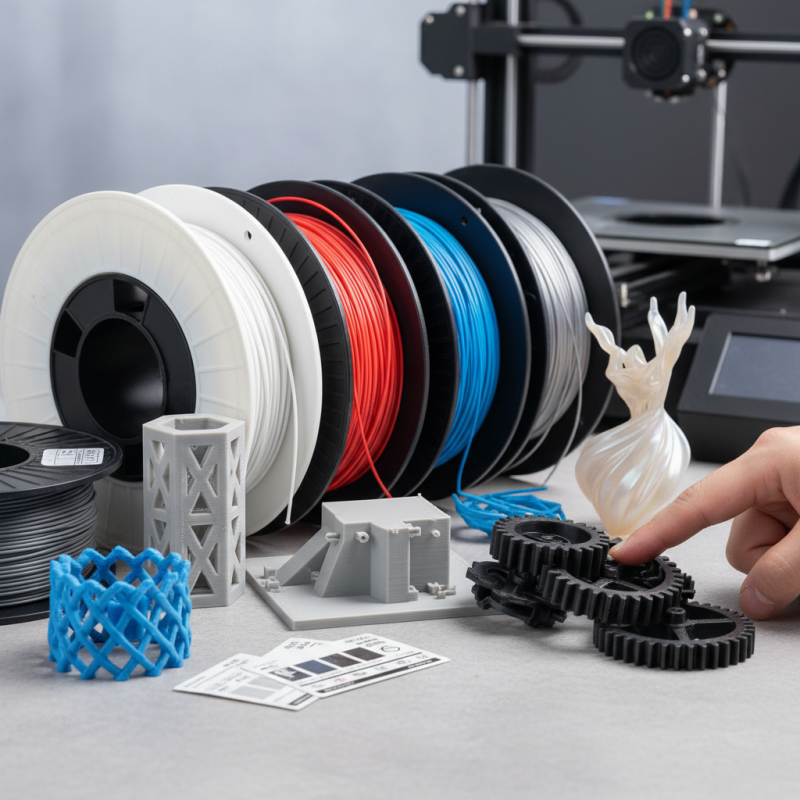
How to Choose the Right 3D Printing Material for Your Needs?

Understanding Different Types of 3D Printing Materials Available Today

When selecting a 3D printing material, understanding the types available is crucial. There are various options, each suited for different applications and desired outcomes. Fused Deposition Modeling (FDM) uses thermoplastics like PLA and ABS. These materials are popular for their ease of use and affordability. PLA is biodegradable, making it an eco-friendly choice. ABS is favored for its strength and durability.

For more complex projects, consider resin options. Photopolymer resins are ideal for high-detail prototypes. They provide a smooth finish that is hard to achieve with filament. However, resins can be more expensive and require post-processing. This can lead to extra time and effort. Weigh these factors before deciding.

Tips: Always test a small print before committing to a material. Different colors and finishes can behave differently, so experimentation is key. Also, consider your printer's specifications; not every printer can handle every material. Factor in how durable or flexible your final product needs to be. Make sure the material aligns with your project's requirements. Your choice will greatly impact the final quality.

Key Properties to Consider When Selecting 3D Printing Materials

When choosing 3D printing materials, several key properties play a crucial role. The first is strength. Understand the mechanical properties required for your project. Some objects need high tensile strength. Others may benefit from flexibility. Assess the finished product’s intended use. A functional prototype will require different material characteristics than an aesthetic model.

Next, consider thermal stability. Some applications may involve heat exposure. Materials with high heat resistance are necessary for such scenarios. Additionally, surface finish is essential. A rough texture can alter the appearance and functionality. You might need a smoother finish for certain designs. Think about finish requirements before making a selection.

Lastly, think about environmental factors. Some materials can degrade faster when exposed to moisture or UV light. Consider how your object will be used and stored. Not every material suits every situation. Reflect on potential limitations and the compromise that might be necessary. Balancing durability with cost is often a challenge. Each choice requires careful evaluation of how it meets your specific needs.

Evaluating Material Compatibility with Your 3D Printer

Choosing the right 3D printing material starts with understanding your printer's compatibility. Each 3D printer has specific requirements for materials. Not every filament works seamlessly with every machine. For instance, while some printers handle PLA well, others may struggle with more specialized materials like nylon.

It's important to evaluate the specifications of your printer. Check the recommended temperature settings and nozzle diameter. Some materials may require higher temperatures, while others perform better at lower settings. This mismatch can lead to poor print quality or even damage your printer. Reflecting on what you need for your projects can guide your material choice.

Consider the properties of different materials. Flexibility, strength, and durability all vary. For instance, TPU is great for flexible parts, while ABS offers sturdiness. Yet, not every need calls for high-end materials. Simpler projects may only need basic filaments like PLA. Understanding these nuances enhances your choices. Sometimes, a basic approach yields the best results, despite the allure of advanced options.

Assessing the Purpose of Your Printed Object and Material Needs

Choosing the right 3D printing material begins with understanding the purpose of your printed object. Will it be functional or decorative? Different applications demand different properties from materials. For functional parts, strength and durability are vital. For display models, aesthetics might take precedence. This basic assessment is crucial.

Consider the environment where your object will be used. Outdoor items need UV resistance and weatherproofing. If your object will experience mechanical stress, you may want to choose stronger materials like nylon or polycarbonate. Reflect on what you genuinely need versus what looks appealing. Often, materials that seem perfect can fall short in practical scenarios.

Lastly, think about the printing process. Some materials require specific printers or settings. If you're unsure, conduct small test prints. These trials can reveal how each material behaves. Exploring different options leads to better decision-making. Don't hesitate to adjust your choices based on results.

How to Choose the Right 3D Printing Material for Your Needs?

Material Type Best For Strength Flexibility Cost per kg Ease of Printing
PLA Prototypes, Models Moderate Low $20 Very Easy
ABS Functional Parts High Moderate $25 Moderate
PETG Durable Parts High High $30 Easy
TPU Flexible Parts Moderate Very High $45 Hard
Nylon Strong, Impact Resistant Parts Very High Moderate $40 Moderate

Cost and Availability: Factors Influencing Material Selection

Selecting the right material for 3D printing is a critical decision. Cost and availability often emerge as key factors in this process. A recent report by the International Plastic Federation highlights that plastic materials account for over 60% of the 3D printing market. Understanding this statistic can help users make informed choices about what to use.

When considering cost, one must take into account the price per kilogram of material. Prices can vary significantly. For example, some filaments may cost around $20 per kilogram, while specialty materials can reach $300 or more. This disparity affects project budgets. Availability also plays a vital role. A material may be cost-effective, but if it’s hard to find, it could disrupt project timelines. Reports show that in 2023, nearly 30% of users faced delays due to material shortages, making this aspect crucial.

Distribution channels are another aspect needing consideration. Even widely used materials often experience supply chain disruptions. Data from a 2023 industry survey indicated that 25% of respondents encountered difficulties sourcing materials, affecting their production schedules. Reflection on these factors is essential. Relying on readily available options might be wise, but one should not overlook potential quality impacts.

FAQS

: What are common types of 3D printing materials?

: Common materials include thermoplastics like PLA and ABS, and resin options for detailed projects.

Why is PLA considered eco-friendly?

PLA is biodegradable, making it a better choice for environmentally conscious projects.

What factors should I consider when choosing a material?

Think about durability, flexibility, and how the material fits your project's needs.

How important is printer compatibility with materials?

Very important. Not every printer works well with every type of filament or resin.

What should I do before printing with a new material?

Always test with a small print to see how the material behaves.

How does the intended use of an object affect material choice?

Functional items need strength, while decorative pieces focus on appearance.

Can a basic material be sufficient for many projects?

Yes, sometimes simpler filaments yield the best results for basic projects.

What type of material is good for flexible parts?

TPU is ideal for creating flexible components in 3D printing.

How does environment impact material selection?

Outdoor items require UV resistance and weatherproofing for durability.

What if I'm unsure about material properties?

Conduct small test prints. Adjust your material choices based on those results.

Conclusion

Choosing the right 3D printing material is crucial for achieving the desired results in your projects. To effectively navigate this process, it’s important to understand the various types of materials available today, which include plastics, metals, and ceramics, each with distinct characteristics. Key properties such as strength, flexibility, and temperature resistance should be carefully evaluated against your specific needs.

Additionally, compatibility with your 3D printer is a vital consideration, as not all materials work seamlessly with every machine. Assessing the purpose of your printed object helps in determining the best material choice. Finally, factors like cost and availability can significantly influence your decision. By considering these elements, you can confidently determine how to choose the right 3D printing material that aligns with your project's requirements.

Ethan

Ethan

Ethan is a seasoned marketing professional with a deep expertise in our company's innovative product line. With a passion for sharing knowledge and insights, he takes the lead in regularly updating our corporate blog, where he explores industry trends, product features, and effective marketing......