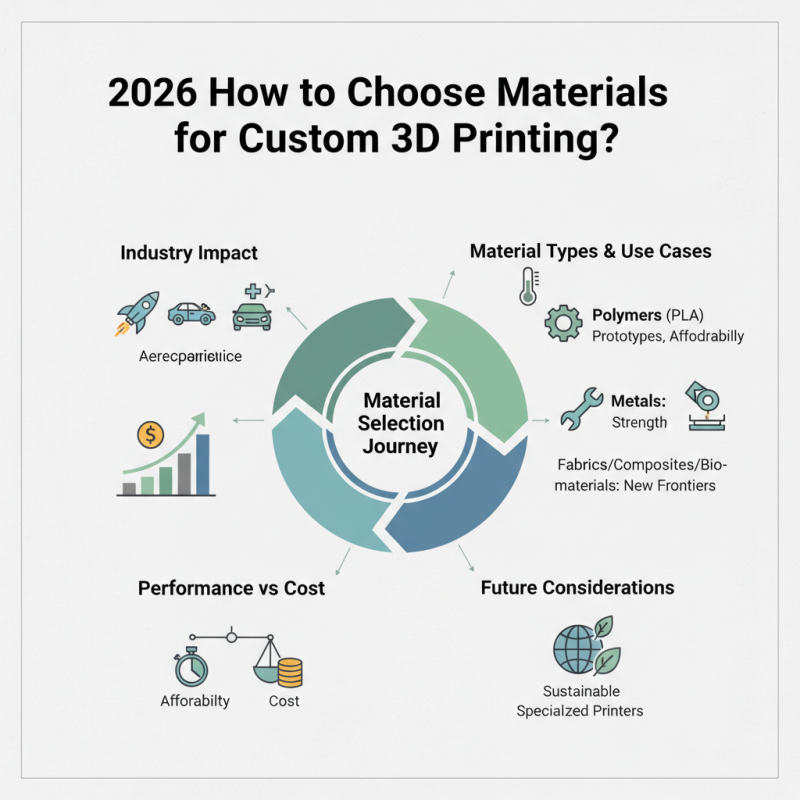
In recent years, custom 3D printing has transformed various industries, including aerospace, automotive, and medical fields. As the market continues to grow, understanding what materials can be used in custom 3D printing becomes crucial for innovators. According to a 2022 report by SmarTech Analysis, the global 3D printing materials market is projected to reach $6.1 billion by 2029, highlighting the increasing importance of material selection.
Choosing the right material directly impacts the functionality and durability of the final product. Fabrics, metals, and polymers serve different purposes in 3D printing. For instance, PLA is popular for prototypes due to its ease of use and affordability. Yet, it may not withstand high temperatures. This aspect raises questions on performance versus cost when selecting materials for 3D projects.
Moreover, advancements in material technology introduce new options, such as composites and bio-materials. However, some materials may require specialized printers, adding complexity to the selection process. As the landscape evolves, businesses must continuously evaluate their choices, ensuring they align with project goals and sustainable practices.
Understanding the Basics of 3D Printing Materials
Choosing the right materials for custom 3D printing is vital. Understanding the basics of these materials can simplify this process. Plastics like PLA and ABS are popular choices because they are user-friendly and versatile. They suit various projects, from prototypes to detailed models. However, their properties differ greatly. For example, PLA is biodegradable, making it eco-friendly, while ABS offers higher strength and flexibility.
Metal and resin materials are also available. Metals are ideal for functional parts, offering durability. Yet, they can be more challenging to print. Resin, conversely, provides excellent detail for intricate designs. The downside is the cost and the need for careful handling. Each type of material has pros and cons, often requiring experimentation. Understanding your needs is crucial, as material choice affects print quality and functionality.
The journey doesn’t end with selection. Each printing project might reveal unforeseen issues. Temperature, humidity, and printer settings can all impact results. Reflection on past prints helps refine material choices. Embracing imperfections can lead to better outputs in the future.
Key Properties to Consider in 3D Printing Materials
When selecting materials for custom 3D printing, several key properties must be considered. Strength is crucial. Different projects may require varying levels of tensile and impact strength. For example, functional prototypes often benefit from sturdier materials. However, aesthetics may take precedence in artistic designs, warranting a more flexible approach.
Another vital property is thermal resistance. Some applications involve exposure to heat. Here, selecting a material with high-temperature stability becomes essential. Yet, many 3D printing materials can warp when heated. This unpredictability can lead to project failures. Understanding the thermal behavior of materials is therefore crucial.
Finally, consider the ease of printing. Some materials flow smoothly while others can clog or jam printers. This inconsistency can frustrate users. Learning the specific printing requirements of each material helps mitigate issues. This knowledge not only improves the printing process but also encourages more innovative and reliable designs. Each property presents challenges that require thoughtful reflection.
2026 How to Choose Materials for Custom 3D Printing? - Key Properties to Consider in 3D Printing Materials
| Material Type |
Strength (MPa) |
Flexibility |
Heat Resistance (°C) |
Ease of Printing |
Cost per kg ($) |
| PLA |
50 |
Low |
60 |
Easy |
25 |
| ABS |
40 |
Medium |
100 |
Moderate |
30 |
| PETG |
45 |
Medium |
75 |
Easy |
28 |
| Nylon |
60 |
High |
90 |
Difficult |
35 |
| TPU |
30 |
Very High |
70 |
Difficult |
40 |
Comparing Common 3D Printing Materials: Plastics to Metals
When selecting materials for custom 3D printing, understanding the characteristics of common options is crucial. Plastics, including PLA and ABS, are popular due to their versatility. PLA is biodegradable and easy to print, making it user-friendly. ABS, however, offers greater durability and is ideal for functional parts. Both materials cater to different project needs, yet their mechanical properties vary significantly.
Metals, like stainless steel and titanium, provide strength for demanding applications. However, metal printing often requires more sophisticated equipment. It can also be cost-prohibitive for small projects. The accuracy and surface finish of metal parts may necessitate post-processing. Balancing the advantages of strength against the costs and complexities is vital.
Choosing between plastics and metals involves understanding your project's specific requirements. Factors like cost, strength, and desired finish all play important roles. It’s also essential to consider the limitations of each material. There is no one-size-fits-all solution, and experimentation may reveal surprising results. Reflecting on past experiences with these materials can help guide future choices.
Evaluating Cost and Availability of 3D Printing Materials
When selecting materials for custom 3D printing, evaluating cost and availability is crucial. The market for 3D printing materials is expected to reach $12.6 billion by 2028, according to a report from MarketsandMarkets. This significant growth reflects a rising demand for diverse materials. However, not all materials are easily accessible or affordable for every project.
Cost varies significantly by material type. For example, standard filaments like PLA tend to be cheaper, often costing around $20 per kilogram. In contrast, specialized materials such as carbon fiber-reinforced filaments can exceed $100 per kilogram. Availability also fluctuates based on region and supplier relationships. Some advanced materials may require longer lead times, which can delay projects.
As you assess materials, consider the trade-offs. High-performance materials are great but can strain budgets. Additionally, sourcing locally may reduce costs and improve availability. However, this could limit your material choices. Balancing cost, performance, and accessibility is vital in the material selection process for successful 3D printing outcomes.
Future Trends in 3D Printing Materials Selection
The materials landscape for 3D printing is evolving rapidly. By 2026, diverse materials will be crucial for custom 3D printing applications. According to a report by MarketsandMarkets, the global 3D printing materials market is projected to reach $12.6 billion by 2028, growing at a CAGR of 25.2%. This surge reflects the increasing adoption of additive manufacturing across various sectors.
Future trends indicate a shift towards bio-based and recycled materials. Demand for sustainable options is increasing. For instance, studies show that 42% of manufacturers are looking for eco-friendly material solutions. However, there are challenges. Many eco-friendly materials still lack the performance and durability of traditional options, pushing developers to innovate continuously. Balancing sustainability with performance remains an ongoing concern.
Furthermore, the customization of materials is also gaining traction. Tailored formulations can enhance properties like flexibility, strength, and thermal resistance. A report from Wohlers Associates highlights that about 35% of designers prioritize material customization in their 3D printing projects. Nevertheless, this trend raises questions about standardization and compatibility within different technologies. As the industry evolves, stakeholders must navigate these complexities to optimize material selection for future applications.
FAQS
: Focus on strength, thermal resistance, and ease of printing. Each project may need different properties.
Strength ensures durability. Functional prototypes need sturdier materials for better performance.
Materials exposed to heat must be stable. Warping can cause project failures, leading to unexpected issues.
Some materials can clog printers. Learning printing requirements helps reduce frustration.
The shift towards bio-based and recycled materials is growing. Companies seek sustainable options.
Not always. Many eco-friendly materials lack the performance needed, presenting ongoing challenges for developers.
Tailoring materials enhances qualities like flexibility and strength. However, compatibility poses challenges.
Smooth material flow is essential. Clogged printers hinder the printing process and slow down projects.
Manufacturers are increasingly seeking eco-friendly solutions. However, balancing sustainability and performance remains tough.
It is expected to reach $12.6 billion by 2028, reflecting the rising adoption of additive manufacturing.
Conclusion
When choosing materials for custom 3D printing, it’s essential to understand the basic types available and their specific properties. Key characteristics to consider include strength, flexibility, temperature resistance, and surface finish, which can significantly impact the final product. Common materials range from various plastics, like PLA and ABS, to metals, each offering unique benefits and applications.
In addition to performance, evaluating cost and availability is crucial, as it can influence both project feasibility and timeline. As technology advances, future trends suggest a growing diversity in available materials, including bio-based and composite options, expanding what materials can be used in custom 3D printing. This continuous evolution will further enhance customization capabilities and sustainability in the additive manufacturing landscape.

 Diem printer