The rise of custom 3D printing has transformed various industries, yet many still wonder, "how accurate is custom 3D printing?" Recent reports indicate that 3D printing accuracy can reach up to 99% for some applications. However, not every 3D printing process achieves this level of precision. Factors such as material choice, printer type, and design complexity all play significant roles in final results.
According to a study by Wohlers Associates, the additive manufacturing market is expected to grow to $35.6 billion by 2024. This growth implies a need for heightened accuracy. Industries like aerospace and medical are especially sensitive to discrepancies. The tolerance levels required in these sectors can mean the difference between success and failure. Custom 3D printing can provide tailored solutions, but the question of accuracy remains.
While many success stories illustrate remarkable advancements, there are still challenges. Variables in printer calibration and environmental conditions can lead to variations. An understanding of these limitations is crucial for consumers. Thus, it is essential to critically evaluate how accurate custom 3D printing can truly be for specific needs. This assessment can make a significant difference in application outcomes.
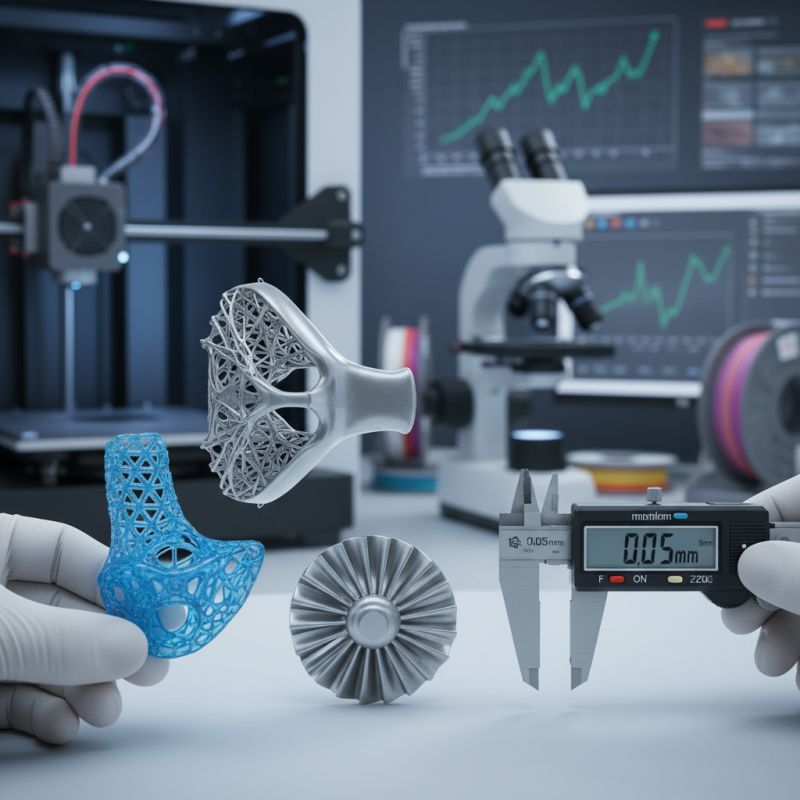
Custom 3D printing has revolutionized various industries by offering tailored solutions. However, its accuracy can vary significantly based on several factors. According to a 2021 report by the American Society for Testing and Materials, the precision of 3D printing can range from ±0.1 mm to ±0.5 mm depending on the technology used. Techniques like SLS (Selective Laser Sintering) often achieve higher accuracy than FDM (Fused Deposition Modeling). Understanding these differences is crucial for users.
Material choice also plays an essential role in achieving desired accuracy. For instance, certain filaments may shrink more than others during cooling, causing dimensional discrepancies. A study published in the Journal of Manufacturing Processes found that inappropriate material selection could lead to inaccuracies exceeding 10%. Users may need to experiment with different settings to find the optimal balance.
Environmental conditions during printing can further impact results. Temperature fluctuations and humidity can cause warping and layer adhesion issues. The 3D Printing Industry reported that a controlled environment can improve dimensional accuracy by 20% in some cases. It’s vital for users to consider these variables and adjust accordingly. Awareness of the limitations in custom 3D printing can guide more informed decisions.
3D printing has revolutionized various industries, offering custom solutions tailored to specific needs. However, accuracy remains a critical factor that varies widely based on several influences. A study by the Wohlers Report highlights that the average tolerance for FDM (Fused Deposition Modeling) printing is between ±0.1 mm to ±0.5 mm, which may not meet precise requirements for certain applications.
Material type significantly affects precision. For instance, PLA and ABS have different shrinkage rates, influencing the final product's dimensions. Furthermore, the printer’s calibration plays a vital role. Regular maintenance and adjustments can improve print fidelity, while neglect can lead to discrepancies. Research indicates that poorly maintained printers can deviate up to 1 mm from intended dimensions.
Another aspect to consider is the layer height. A smaller layer height typically enhances accuracy but may extend print time. In contrast, larger layers can save time but often compromise detail. Real-world applications show that engineers often have to balance speed and precision, requiring constant reflection on the project’s priorities. Ultimately, understanding these key factors is essential for achieving the desired outcomes in custom 3D printing.
| Factor | Description | Impact on Accuracy (%) |
|---|---|---|
| Material Quality | The type and quality of filament or resin used in printing. | 20-30% |
| Printer Calibration | Regular adjustments to ensure accurate movements and temperature settings. | 15-25% |
| Layer Height | The thickness of each layer affects detail resolution and surface smoothness. | 10-20% |
| Print Speed | Faster speeds may reduce accuracy due to the limitations in extrusion. | 5-15% |
| Environmental Factors | Temperature, humidity, and airflow can affect the printing process. | 5-10% |
| Design Complexity | The intricacy of the design can challenge the printer's capabilities. | 10-20% |
Accuracy in 3D printing is not a one-size-fits-all metric. Several industry standards exist to measure this accuracy. ASTM F2921 outlines the need for precision in both dimensional and geometric attributes. This standard is crucial for industries like aerospace and medical, where even a millimeter can lead to significant performance issues.
Reports indicate a variance in accuracy based on the printing technology used. For instance, fused deposition modeling (FDM) can achieve tolerances of ±0.2 mm. In contrast, stereolithography (SLA) can reach as close as ±0.05 mm. Such differences highlight the importance of selecting the right method for specific needs. However, even with these high standards, many users report inconsistencies, suggesting that practical application may not always align with theoretical capabilities.
Another point of consideration is the role of post-processing. Many techniques, like sanding or painting, can enhance surface finish but may affect dimensions. It raises questions about how much accuracy users truly achieve after finishing steps. Users frequently find themselves adjusting their designs due to slight discrepancies. This adjustment process can lead to overlooked factors, impacting the final product's performance and requiring ongoing reflection and refinement.
In recent years, custom 3D printing has grown in popularity across various industries. Different applications require different accuracy levels. For example, medical implants typically require high precision. Research indicates that the acceptable tolerance for such applications can be as tight as +/- 0.1 mm. This level of accuracy directly impacts patient safety and device functionality.
In contrast, the construction sector often uses 3D printing for prototyping models. These require less precision, and tolerances can be as loose as +/- 1 mm. A study by the additive manufacturing community found that ambiguity in dimensions could lead to project delays and increased costs. Many builders report challenges in coordinating design specifications, which can affect project outcomes.
Another application is in aerospace, where precision is critical. Aviation components must meet strict standards with tolerances sometimes as small as +/- 0.05 mm. Industry reports emphasize the importance of rigorous testing and validation to ensure performance. Without this, the risk of failure increases significantly. This highlights the need for continuous improvement in printing technologies and processes.
3D printing has evolved dramatically, offering various technologies with unique accuracy metrics. SLA, FDM, and SLS are among the most prevalent. Each has its strengths and weaknesses in achieving precision. SLA stands out for its fine details and smooth finishes, making it suitable for intricate designs. Yet, it can be less durable compared to other methods.
FDM is widely used due to its accessibility and ease of use but often falls short in terms of exactness. Layer adhesion issues can create visible lines in the prints. SLS, while excellent for functional prototypes, may not always deliver the aesthetic quality some projects require. Knowing these nuances helps users choose the right technology based on their specific needs.
Users should reflect on their project's goals. Is precision paramount, or is speed and cost more critical? The choice in technology directly impacts the final product's quality. Minor imperfections can reveal much about the printing process and materials used. Regular assessments and iterations can lead to better outcomes in future projects.
: Key factors include material type, printer calibration, and layer height. These greatly impact final dimensions.
Different materials, like PLA and ABS, have varying shrinkage rates, impacting product dimensions differently.
Regular maintenance can greatly improve print fidelity. Neglect may result in deviations of up to 1 mm.
Smaller layers enhance accuracy but increase print time. Larger layers save time but may compromise detail.
Standards like ASTM F2921 are used to define precision in dimensional and geometric attributes in various industries.
FDM offers tolerances of ±0.2 mm, while SLA achieves ±0.05 mm. Technology choice is crucial for desired outcomes.
Techniques like sanding can improve finish but may alter dimensions. Users often adjust designs for consistency.
Many users experience inconsistencies, indicating practical results often differ from theoretical expectations.
Balancing speed and precision is tough. Constant reflection on project priorities is necessary for achieving goals.
Users often miss factors impacting performance. Ongoing refinement is needed for better final products.
The article "How Accurate is Custom 3D Printing for Your Needs?" explores the critical aspects of accuracy in custom 3D printing. It begins by defining the basic concepts related to 3D printing accuracy and elaborates on the key factors that influence precision, such as machine calibration, material properties, and environmental conditions. The discussion also touches upon industry standards that measure and regulate the accuracy of 3D printing, ensuring consistency across various applications.
Furthermore, the article highlights common applications that demand specific accuracy levels and undertakes a comparative analysis of different 3D printing technologies, emphasizing their respective accuracy metrics. By understanding these elements, readers can better assess how accurate is custom 3D printing for their specific needs, enabling more informed decisions when selecting 3D printing solutions.

Diem printer