Can 3D Printing Really Replace Traditional Manufacturing in 2026?

Time:2026-05-28 Author:Ethan
0%

As we approach 2026, the question arises: can 3D printing replace traditional manufacturing? This technology promises to transform production processes. However, experts remain divided on its potential. Dr. Emily Carter, a leading authority in additive manufacturing, once said, "3D printing can disrupt conventional methods, but it won’t be a complete replacement."

While 3D printing offers speed and customization, it may struggle with mass production. Traditional manufacturing excels in efficiency and cost-effectiveness for large runs. Nevertheless, the flexibility of 3D printing can enhance prototyping and small-batch production. Businesses may find a hybrid model beneficial, merging the strengths of both methods.

Despite the excitement around 3D printing, challenges persist. Material limitations and production speed still need improvement. The future might see a synergy of technologies rather than a total takeover. This ongoing evolution invites reflection: how can we harness the benefits of both worlds? As industries navigate this transition, the pivotal question remains: can 3D printing replace traditional manufacturing, or will it coexist in a new industrial landscape?
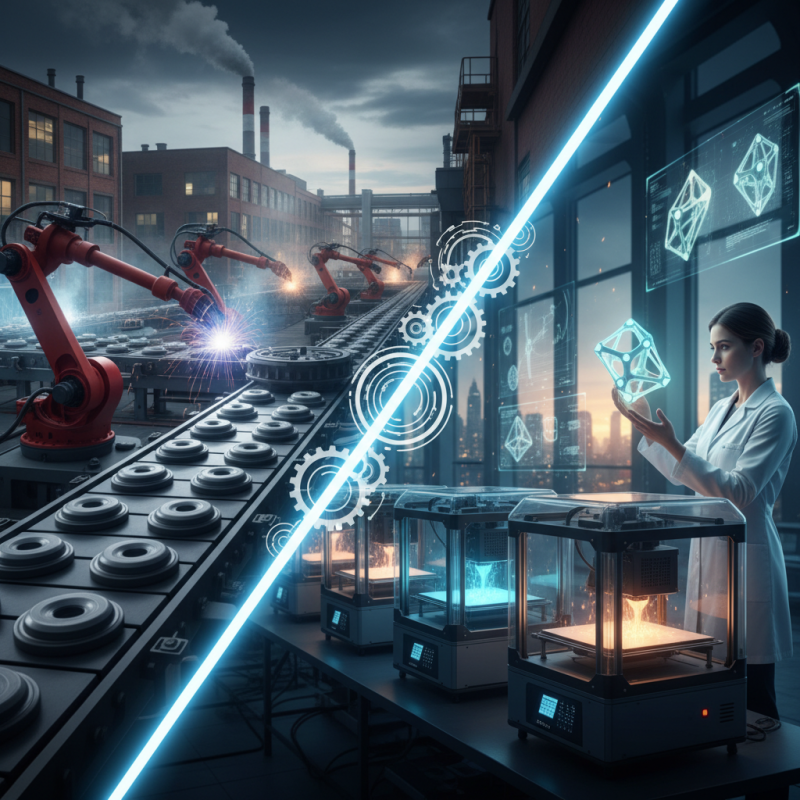
Can 3D Printing Really Replace Traditional Manufacturing in 2026?

The Current State of 3D Printing Technology in Manufacturing

The current state of 3D printing technology in manufacturing reveals transformative potential. Reports indicate that the global 3D printing market was valued at $13.7 billion in 2020 and is projected to reach $34.8 billion by 2026. This staggering growth highlights a shift in how products are designed and produced. Industries are investing heavily to streamline their processes and reduce waste.

In many sectors, additive manufacturing is already proving effective. For instance, aerospace companies are utilizing 3D printing to create lightweight components, improving fuel efficiency. A recent study showed that 3D-printed parts can be 70% lighter than traditional components. However, challenges persist. Not all materials are suitable for 3D printing, and production speed can be an issue. Some manufacturers are still hesitant to fully embrace this technology due to concerns about quality and consistency.

The potential for customized solutions is significant. Small batches and complex geometries are more feasible than ever. Yet many firms lack the expertise to implement these technologies effectively. A survey indicated that 30% of companies cite a skills gap as a barrier to adopting 3D printing. As technology advances, addressing these challenges will be crucial for broader acceptance in traditional manufacturing.

Key Industries Adopting 3D Printing: A Market Analysis

The adoption of 3D printing is shaping key industries like aerospace and healthcare. These sectors have begun to see transformative benefits. In aerospace, 3D printing allows for lightweight components, improving fuel efficiency. Healthcare benefits from personalized implants and prosthetics, tailored for individual patients.

However, challenges remain. The technology’s limitations in material diversity and production speed are significant. Traditional manufacturing processes are still faster for large quantities. Companies must evaluate when to integrate 3D printing effectively.

Tip: Assess your industry’s readiness for 3D printing. Consider both production capacity and customer needs. Engaging with experts can provide valuable insights.

In construction, 3D printing shows promise. Entire buildings can be printed quickly, reducing waste. Still, regulatory issues and initial costs can stunt adoption. Organizations must weigh the pros and cons carefully.

Tip: Start small. Prototype with 3D printing before scaling up. This minimizes risk and allows for iterative improvements.

Cost Comparisons: 3D Printing vs Traditional Manufacturing Methods

In recent years, 3D printing has gained traction as a potential alternative to traditional manufacturing. Cost comparisons reveal significant differences. Traditional manufacturing often requires expensive molds and long production times. Initial setup costs can be high, leading to a financial burden on companies. However, for high-volume production, these costs can be spread out, making it more economical per unit.

On the other hand, 3D printing offers flexibility. It allows for rapid prototyping without needing molds. This reduces waste and saves time. Yet, the material costs for 3D printing can be higher than traditional methods. Some manufacturers question the durability of 3D-printed products. Therefore, the choice between these methods often hinges on specific project needs. Companies must weigh initial costs against long-term savings and production efficiency. The landscape is evolving, and the effectiveness of both methods continues to be a hot topic for manufacturers.

Cost Comparison: 3D Printing vs Traditional Manufacturing Methods (2026)

This chart compares the average cost per unit of various manufacturing methods in 2026. It highlights the cost efficiency of traditional manufacturing compared to 3D printing, providing insights into the trends in production costs.

Projected Growth: 3D Printing Market Size by 2026

As industries evolve, the 3D printing market is projected to experience significant growth. According to a recent study by SmarTech Analysis, the global 3D printing market is expected to reach approximately $41 billion by 2026. This marks a remarkable increase compared to earlier years. The demand for custom parts and rapid prototyping is fueling this expansion.

Adoption of 3D printing technology in sectors like aerospace and healthcare is also surging. The technology offers manufacturing flexibility and can reduce production lead times. A report from Deloitte indicates that over 80% of manufacturers are exploring additive manufacturing as an alternative. However, there are challenges to consider. The limitations in material choices and the scale of production remain barriers for widespread adoption.

Innovation in 3D printing materials is ongoing, yet not fully mature. Many companies report difficulties in achieving the quality and finish of traditionally manufactured parts. There’s a notable gap between expectation and reality in the production process. While projections are optimistic, industry experts advise caution. The potential of 3D printing is vast, but full replacement of traditional manufacturing might still be years away.

Projected Growth: 3D Printing Market Size by 2026

Year Market Size (in Billion USD) Growth Rate (%) Key Applications
2023 12.0 17% Aerospace, Automotive
2024 14.0 16% Healthcare, Consumer Products
2025 17.2 23% Education, Robotics
2026 21.5 25% Construction, Fashion

Challenges and Limitations Facing 3D Printing Adoption in Manufacturing

3D printing holds promise for revolutionizing manufacturing. Yet, significant challenges loom. One major issue is material limitations. Many 3D printers cannot handle diverse materials required in traditional manufacturing. This restricts the range of products that can be created.

Another challenge is speed and scalability. While 3D printing can produce complex components quickly, scaling up production remains an obstacle. Traditional methods often outpace 3D printing in mass production efficiency. Companies might hesitate to transition entirely to this technology.

Tips: Consider investing in training for your team. Understanding 3D printing technology can drive innovation. Regularly assess your manufacturing needs. Identify which components could benefit from 3D printing.

Quality control is also a concern. Parts may vary in quality, risking functionality. Manufacturers must implement rigorous testing protocols to ensure safety and reliability. This can slow down the adoption process even further.

Tips: Implement a feedback loop with your team. Discuss challenges faced during 3D printing projects. Continuous improvement is vital for integrating new technologies effectively. Embrace the learning curve; adaptability is key in this evolving landscape.

FAQS

: What industries are benefiting from 3D printing?

: Aerospace and healthcare are major industries using 3D printing for enhanced efficiency and personalized solutions.

What advantages does 3D printing offer in aerospace?

It provides lightweight components, leading to improved fuel efficiency for aircraft.

How is healthcare utilizing 3D printing?

It helps create personalized implants and prosthetics, tailored to individual patient needs.

What challenges does 3D printing face?

Limited material options and slower production speeds compared to traditional methods are key challenges.

Why might companies hesistate to adopt 3D printing?

Traditional manufacturing is often faster for large quantities and involves more established processes.

What should companies consider before adopting 3D printing?

Assess your industry’s needs and readiness for the technology. Engage with experts for insights.

How does 3D printing compare in cost to traditional manufacturing?

Initial costs for traditional methods may be high, but 3D printing can have expensive material costs.

What is a good strategy for adopting 3D printing in construction?

Start with small prototypes to minimize risk and allow room for improvements.

What is a significant drawback of 3D printing?

The durability of 3D-printed products raises concerns for some manufacturers.

What should manufacturers keep in mind regarding 3D printing?

Evaluate specific project needs and weigh costs against potential long-term savings and efficiency.

Conclusion

The article explores the potential of 3D printing to transform manufacturing by 2026, examining whether can 3D printing replace traditional manufacturing. It begins with an overview of the current capabilities and advancements in 3D printing technology, highlighting its increasing adoption across key industries such as aerospace, healthcare, and automotive. A market analysis reveals the economic advantages of 3D printing compared to traditional methods, particularly in terms of material waste reduction and design flexibility.

Additionally, the article projects significant growth in the 3D printing market size by 2026, reflecting its rising acceptance and technological improvements. However, it also addresses various challenges and limitations that may hinder widespread adoption, such as production speed, material constraints, and regulatory concerns. Overall, while 3D printing shows promise, the article suggests that it may complement rather than entirely replace traditional manufacturing processes in the near future.

Ethan

Ethan

Ethan is a seasoned marketing professional with a deep expertise in our company's innovative product line. With a passion for sharing knowledge and insights, he takes the lead in regularly updating our corporate blog, where he explores industry trends, product features, and effective marketing......