The rise of 3D printing in China has sparked debates about its practicality. Many experts argue, "Is 3D printing durable for functional use?" This question is crucial as industries embrace additive manufacturing. According to a report by Statista, the global 3D printing market is projected to reach $34.8 billion by 2024, driven by demand in automotive, healthcare, and aerospace sectors.
However, concerns about material strength persist. A survey conducted by Wohlers Associates indicated that over 60% of manufacturers doubt the durability of 3D-printed components for long-term applications. For example, products made with polymer materials may not withstand the same stresses as traditional manufacturing methods. Additionally, variations in printing techniques can lead to inconsistencies, challenging the standardization that industries require.
These limitations remind us of the need for cautious adoption. While advancements in materials, such as carbon fiber-reinforced filaments, show promise, the question remains: can we rely on 3D printing for crucial functional uses? Addressing durability issues will be essential for wider acceptance and successful integration into existing manufacturing practices.
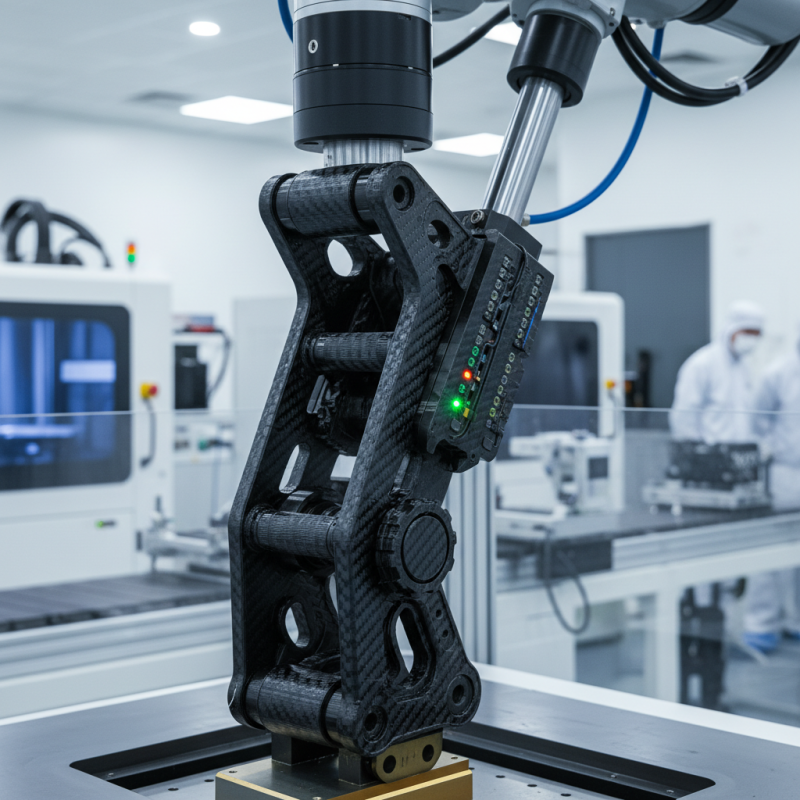
Overview of 3D Printing Technology in China
3D printing in China has witnessed rapid advancements over the past few years. This technology is now being utilized in various sectors, including manufacturing, healthcare, and automotive. However, there are still challenges regarding the durability of 3D-printed products. Understanding these challenges can help improve functional usage.
One major issue is the choice of materials. Many common 3D printing materials may not withstand high stress or extreme environmental conditions. Additionally, the quality control of prints varies significantly. This inconsistency raises questions about reliability in critical applications. Users must assess whether a 3D-printed part can endure everyday use.
**Tip:** Always inspect the printing material and layer adhesion. A strong bond between layers enhances durability. Testing prototypes can also identify weaknesses early on.
Another consideration is the technology itself. Different 3D printing techniques yield varying results. For example, Fused Deposition Modeling (FDM) may not produce as strong a product as Stereolithography (SLA). Therefore, knowing the technology behind the print can help gauge its suitability for practical uses.
**Tip:** Research the printing technique used for your project. This insight will prepare you for potential limitations. Don't hesitate to consult experts in the field for guidance.
Materials Used in 3D Printing: Strength and Durability
In recent years, 3D printing has gained popularity for producing functional items. However, questions remain about the strength and durability of the materials used. Many types of filaments are available, each exhibiting different properties. Common materials like PLA and ABS vary in impact resistance and flexibility. PLA, while easy to print, may not withstand high temperatures.
Durability is a crucial factor in functional use. While some 3D printed objects can endure stress, others may fail under pressure. Engineering teams must test prototypes rigorously. Factors like layer adhesion and printing techniques can influence product lifespan. In some cases, a printed object might look functional but can break under real-world conditions.
Further research is essential to improve material performance. Testing in various environments can provide insights into durability. Bridging the gap between aesthetics and functionality remains a challenge. As technology advances, we may see stronger materials emerge from 3D printing. However, consumers must remain cautious. Awareness of the limitations is critical for practical applications in industries like manufacturing and construction.
Applications of 3D Printing in Various Industries in China
3D printing is transforming various industries in China. The technology finds applications in healthcare, automotive, and aerospace sectors. In healthcare, hospitals utilize 3D printing for custom prosthetics and dental devices. This innovation provides a personalized approach to treatment. Moreover, the implications for faster production times are significant. Patients benefit from solutions tailored specifically to their needs.
In the automotive industry, manufacturers adopt 3D printing for prototyping and tooling. It enables rapid iteration of designs without extensive lead times. However, durability remains a concern. Some prototypes do not withstand rigorous testing. In aerospace, companies experiment with lightweight components, pushing the limits of design. Although the initial results are promising, the long-term reliability of these parts is still questioned.
China's commitment to advancing 3D printing technology is evident. However, the journey faces challenges. Addressing material limitations is vital for functional use. Industry players must also embrace quality control processes. The balance between innovation and reliability remains crucial for the future.
Durability of 3D Printing for Functional Use in China
Challenges in Achieving Durability for Functional 3D-Printed Products
In recent years, 3D printing has gained significant traction in China. However, durability remains a pressing issue. While the technology has advanced, challenges persist in achieving the toughness required for practical applications. Industry reports indicate that around 30% of 3D-printed products fail to meet expectations for durability in functional use.
Material selection plays a critical role in this context. Commonly used plastics like PLA and ABS, while popular, do not always withstand stress and temperature fluctuations. Studies show that only 20% of parts made with these materials can endure heavy loads without deformation. Moreover, post-processing methods, like curing and surface treatment, are often overlooked. This can lead to weakness in the final product.
Research highlights that approximately 40% of manufacturers still face difficulties in ensuring long-lasting performance. This brings to light the need for better quality control and material innovation. There is a growing demand for stronger materials. Yet, many users remain unaware of the discrepancies in various printing techniques. Addressing these durability challenges is essential for the broader acceptance of 3D printing technology in functional applications.
Future Prospects and Innovations in 3D Printing Durability in China
As 3D printing technology evolves in China, durability remains a critical concern. Many applications require parts that can withstand stress and strain. For industries like automotive and aerospace, failures can lead to significant safety risks. Current materials used in 3D printing, such as plastics and metals, sometimes fall short of traditional manufacturing methods. Investigating new composite materials could provide stronger options. Innovations in material science may address these issues.
Looking ahead, several exciting advances are on the horizon. Researchers are exploring bio-inspired designs for enhanced strength. Also, multiple printing techniques are being developed to improve layer adhesion. However, consistency in quality control remains a challenge. Each 3D printed item can differ slightly, which can impact its performance. These factors require more rigorous testing.
Moreover, collaboration between academia and industry can drive progress. Sharing knowledge and resources can accelerate the innovation cycle. Despite the challenges, the potential for durable 3D printed components is vast. Maintaining a focus on research and development is crucial for realizing this potential in China’s manufacturing landscape.
FAQS
: PLA and ABS are common materials. Each has different properties and strengths.
Durability is vital for functional items. Some products may fail under pressure during use.
Yes, some items appear functional but can break when tested in real-world situations.
Rigorous testing is essential. It helps identify weak points and improves design durability.
It allows for custom prosthetics and dental devices. This leads to personalized patient care.
Some prototypes lack durability and may not withstand rigorous testing, raising concerns.
Researchers are looking into bio-inspired designs and composite materials to enhance strength.
Quality control ensures consistency. Variability can impact performance and longevity of parts.
There are challenges, but potential for durable components exists. Focus on research is key.
Collaboration can speed up innovation. Sharing knowledge between sectors is essential for progress.
Conclusion
The article "Is 3D Printing Durable Enough for Functional Use in China?" explores the advancements and applications of 3D printing technology in the Chinese industrial landscape. It begins with an overview of the current state of 3D printing in China, focusing on the various materials utilized in the process and their implications for strength and durability. Applications span multiple sectors, including automotive, healthcare, and aerospace, showcasing the versatility of 3D printing in functional contexts.
However, the article also delves into the challenges that persist in achieving sufficient durability for functional 3D-printed products. Factors such as material limitations, post-processing techniques, and environmental influences are examined. Looking ahead, the future prospects and innovations in enhancing 3D printing durability suggest that ongoing research and development may eventually lead to solutions that affirmatively answer the question: is 3D printing durable for functional use?

 Diem printer